
CDW Slides After Nasdaq-100 Exit, ETFs Adjust FY25
Thu, March 19, 2026CDW Slides After Nasdaq-100 Exit, ETFs Adjust FY25
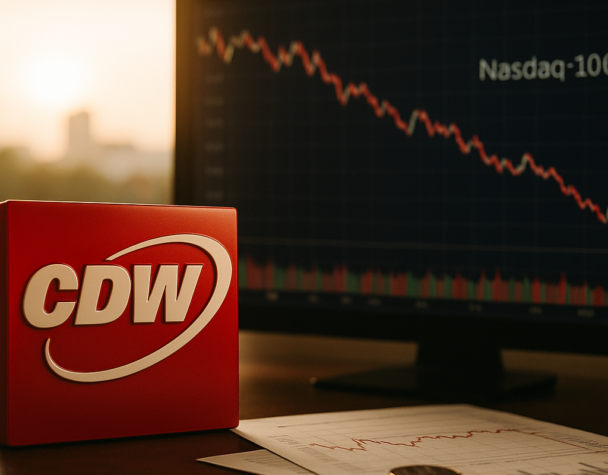
CDW (Nasdaq: CDW) experienced renewed selling pressure this week after Nasdaq’s annual reconstitution removed the company from the Nasdaq-100. That technical change, combined with a measurable post-earnings decline, has intensified volatility for the enterprise-focused reseller. While fundamentals show bright spots—robust Small Business revenue growth and substantial shareholder returns—the index removal creates an immediate shift in demand dynamics tied to ETF and index fund flows.
What Happened: Index Removal and Earnings Reaction
Nasdaq-100 reconstitution removed CDW
Nasdaq’s index reconstitution disqualified CDW from the Nasdaq-100, prompting index-tracking vehicles to rebalance. For stocks removed from a headline index, the mechanical result is predictable: funds that replicate the Nasdaq-100 must sell the position. That forced selling can temporarily depress the share price independent of company fundamentals.
Investor response after earnings
Separately, CDW’s shares have traded lower since its most recent quarterly report—down roughly 11.7% in the days following the release. Investors parsed the detail: Small Business revenue accelerated, up about 18.4% year-over-year, which contrasts with a softer Corporate segment. Management also returned nearly $982 million to shareholders in 2025 through dividends and buybacks, and reiterated a long-term objective of outgrowing the U.S. IT addressable market by 200–300 basis points.
Why Removal Matters: Passive Flows and Volatility
ETF mechanics create immediate selling pressure
When an index drops a stock, ETFs and mutual funds that track that index must adjust holdings to mirror the new composition. Imagine the index as a scoreboard and passive funds as copycats that match each player on it: when one player is taken off the board, the copycats drop that player too. For CDW, that means programmatic sell orders from funds—orders that are large, rapid, and indifferent to near-term fundamentals.
Short-term demand shifts, long-term fundamentals remain
Index-driven outflows can overpower buybacks or steady revenue growth in the short run, amplifying price swings. However, index reconstitution is a structural event, not a commentary on product strategy, customer wins, or long-term profitability. CDW’s reaffirmed growth targets and capital return program show management’s commitment to shareholder value even as passive demand ebbs.
What Investors Should Watch
Liquidity and trading volumes
Higher trading volumes and larger bid-ask spreads are typical in the aftermath of an index exit. Watch intraday liquidity and whether institutional buyers appear to scoop up shares at depressed levels—this can signal that fundamental investors view the decline as a buying opportunity.
Guidance, segment trends, and buybacks
Monitor future quarterly guidance for confirmation that Small Business momentum is sustainable and for any signs of stabilization in Corporate sales. Also track CDW’s share-repurchase cadence: buybacks can moderate the supply shock from index-related selling if the company accelerates repurchases.
Conclusion
CDW’s removal from the Nasdaq-100 has created an immediate technical headwind that compounds a post-earnings selloff. While forced ETF and index-fund rebalancing can depress the stock in the near term, CDW’s operational indicators—strong Small Business growth, meaningful shareholder returns, and a stated objective to outpace the IT addressable market—remain intact. For investors, the choice is between treating the move as a liquidity-driven dip to evaluate on fundamentals, or recognizing heightened volatility until passive flows settle.
Key monitoring items: trading liquidity, subsequent quarterly guidance, and the company’s buyback activity to gauge whether the price dislocation is transient or the start of a longer re-rating.