
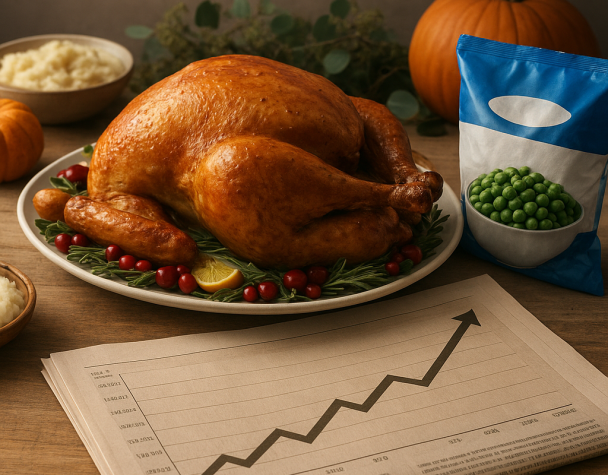
Conagra’s Birds Eye Highlights Thanksgiving Demand as CAG Trades at $15.16
Tue, November 17, 2026Conagra Brands is highlighting seasonal demand for its Birds Eye frozen-vegetable business ahead of Thanksgiving, giving investors a current view of how one of its key brands is positioned during the holiday selling period.
In a November 10 update, Conagra said Birds Eye frozen-vegetable dollar sales increased 12.7% to $96.6 million during the four weeks leading up to Thanksgiving in 2025, compared with $85.8 million in the prior month. The broader frozen-vegetable category grew 7.9% over the same period, according to the company.
Birds Eye enters a key holiday sales window
Conagra also said Birds Eye frozen-vegetable sales were nearly 34% above average weekly sales during Thanksgiving week last year. Frozen sweet-potato sales were nearly 175% above the brand’s average four-week sales for the year during the month leading up to Thanksgiving.
The figures underscore the importance of holiday consumption for Conagra’s frozen-food portfolio. Thanksgiving is a concentrated selling period for side dishes and meal components, making execution across retail distribution, promotions and inventory particularly important for the company’s Birds Eye brand.
Conagra’s update focused on consumer meal planning and the role of frozen vegetables in holiday cooking. It did not constitute new companywide financial guidance or a replacement for the company’s most recent earnings outlook.
CAG shares advance separately
Conagra shares closed at $15.16 on November 16, 2026, up 1.54% for the session. The stock movement is presented separately from the Birds Eye announcement because the available company update does not establish that the brand’s Thanksgiving commentary caused the share-price change.
Investors continue to watch whether Conagra can use established brands in frozen foods, snacks and other packaged-food categories to improve demand and simplify its portfolio. Birds Eye’s holiday performance will be one seasonal indicator of how effectively the company is converting consumer demand into retail sales during an important shopping period.