
BKNG Surges on Spotnana, Agoda & OpenTable Deals!!
Thu, December 11, 2025Booking Holdings’ Recent Week of Deal‑Driven Momentum
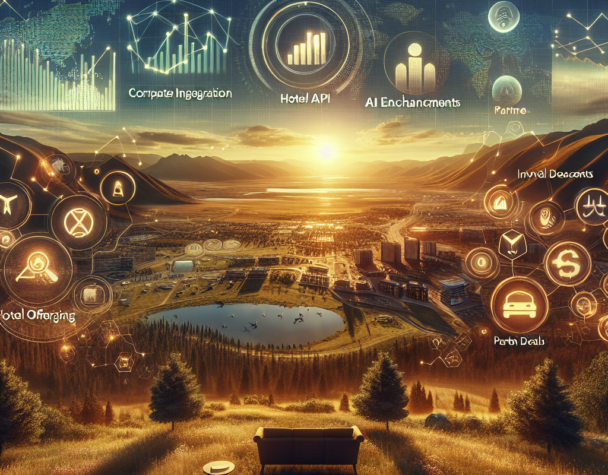
This week delivered a string of concrete partnership announcements that moved the needle for Booking Holdings (BKNG). Rather than speculative headlines, investors reacted to tangible integrations that expand distribution, automate operations and open corporate channels. Together these deals—Spotnana’s API access, Allegiant’s hotel storefront powered by Rocket Travel (Agoda’s B2B arm), AI enhancements in OpenTable, and a viagogo booking flow—signal Booking’s strategy of embedding its inventory and tech across other companies’ customer journeys.
Why the Partnerships Matter for BKNG
1. Corporate travel: Spotnana opens a new highway
Spotnana’s integration gives travel management companies (TMCs) direct API access to Booking.com’s inventory, consumer‑level rates and self‑service booking capabilities. For BKNG, that’s more than a distribution win: it’s a way to convert leisure-focused inventory into corporate bookings without building a separate corporate stack. Think of it as building a multi‑lane expressway between Booking’s supply and corporate demand; corporate travel tends to deliver higher average booking value and stickier relationships, which can be margin‑accretive over time.
2. Airline loyalty meets hotel inventory: Allegiant + Rocket Travel
Allegiant’s new hotel booking experience—powered behind the scenes by Rocket Travel by Agoda—lets airline loyalty members search and redeem points on a wide hotel catalog while Rocket Travel handles fulfillment and service. This is a classic B2B2C play: Booking’s inventory and logistics run quietly in the background while a partner brand owns the customer touchpoint. For investors, that reduces Booking’s reliance on direct consumer acquisition while broadening booking channels.
3. AI and service automation: OpenTable’s conversational upgrades
OpenTable’s integration with AI tools that manage voice and conversational bookings lowers operational friction for restaurants and diners. While restaurant bookings are a smaller revenue stream than lodging, automating low‑margin service tasks demonstrates Booking’s broader AI rollout and commitment to efficiency. Over time, these automation gains compound—reducing cost per interaction and improving partner retention.
Event‑Driven Travel: viagogo Partnership
viagogo’s collaboration with Booking.com integrates ticket buyers’ travel needs—hotels, flights, cars and activities—directly into the checkout flow. This “event travel” funnel captures high‑intent, often out‑of‑town travelers and turns a single ticket purchase into a multi‑product booking. For BKNG, event aggregation is a demand accelerator: customers buying tickets are highly likely to convert on ancillary travel products, increasing gross bookings per user.
Financial Context: Fundamentals Back the Headlines
Those partnerships arrived against a backdrop of healthy recent financials. Booking’s latest quarterly results showed revenue and adjusted EPS beating consensus, gross bookings growth and a continued recovery in room nights. These fundamentals reduce the risk that partnership announcements are merely headline decoration—investors can see operating strength alongside strategic expansion. Analyst upgrades, including a notable lift in sentiment from some firms, helped translate these operational wins into share‑price momentum, with BKNG rallying sharply on the week’s newsflow.
Competitive Frame: Google’s AI Push Still Relevant
Google’s accelerated AI travel initiatives continue to loom as a competitive factor: search‑level distribution and shopping experiences powered by Google can affect traffic and pricing dynamics. However, Booking’s approach—embed distribution through partners, productize its B2B offerings, and bake AI into operations—targets pockets of demand that are harder for a general search provider to fully monetize. In other words, Google competes for discovery; Booking is focused on orchestration and fulfillment across the trip.
What This Means for Investors
- Visibility of execution: These are concrete deals with immediate integration work, not exploratory memos—clarity that matters to public markets.
- Diversified channels: Airline loyalty, corporate APIs, event ticketing and restaurant automation widen Booking’s sources of bookings and reduce single‑channel dependency.
- Margin leverage potential: Corporate bookings and B2B fulfillment partnerships can improve revenue quality over time, even if unit take rates differ from direct consumer bookings.
- AI as multiplier: Automation lowers costs and can improve partner economics, helping Booking scale services without linear increases in support costs.
Conclusion
Over the past week, Booking Holdings demonstrated tangible progress toward its long‑stated goal of becoming a travel orchestration platform rather than only a consumer‑facing OTA. The Spotnana corporate integration, Allegiant’s Rocket Travel shopfront, OpenTable’s AI upgrades and viagogo’s event funnel are practical steps that expand distribution, deepen partnerships and broaden product reach. Coupled with solid recent earnings and renewed analyst support, these developments provide a credible near‑term rationale for BKNG’s stock strength and a clearer view of its longer‑term monetization pathways.