
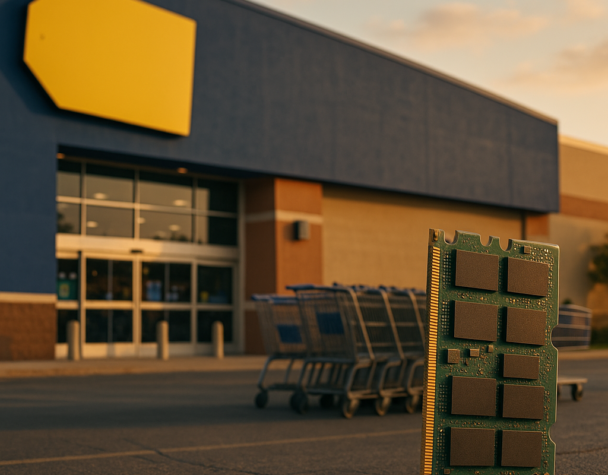
Best Buy (BBY) Faces Margin Pressure From DRAM Now
Mon, March 23, 2026Introduction
Best Buy (BBY) entered March 2026 under increased scrutiny after a wave of industry and analyst notes flagged memory-chip supply and pricing as a concrete headwind for consumer electronics retailers. With the company’s fourth-quarter results released on March 3, investor attention has shifted to how DRAM-driven cost inflation and subdued consumer spending will show up in margins, inventory management and near-term guidance.
What Happened This Week
Two developments dominated headlines and investor conversations:
- On March 1, 2026, Citi analysts publicly cautioned that Best Buy could miss consensus EPS, explicitly citing structurally soft consumer demand and memory (DRAM) supply constraints as sources of margin pressure.
- Best Buy filed an SEC Form 8-K confirming its fourth-quarter (ending January 31, 2026) results and held the related earnings call on March 3, 2026. The earnings release and management commentary are the primary data points investors are digesting.
Why DRAM Matters for Best Buy
Memory chips are embedded in a wide range of consumer electronics—PCs, gaming consoles, smartphones and many smart-home devices. When DRAM prices spike, suppliers face higher production costs, which can either push pricing to consumers or compress retailer margins.
Concrete data
- DRAM prices surged dramatically in 2025 (reported increases in some metrics exceeded 170%), driven largely by tight supply and elevated demand from AI and data-center customers.
- Analysts expect the PC market to cool in 2026, with forecasts indicating roughly a 2.6% decline in unit demand—another pressure point for retailers dependent on computing sales.
Direct Impacts on BBY’s Financials
The intersection of higher component costs and softer unit demand creates a three-way squeeze on Best Buy:
- Gross margins: If suppliers pass on costs and Best Buy cannot fully pass those costs to price-sensitive shoppers, gross margins will compress.
- Inventory valuation and mix: Elevated component costs can inflate inventory values and complicate markdown strategies if demand weakens for higher-cost items.
- Promotional intensity: To clear slower-moving categories, Best Buy may increase promotions—dampening ASPs (average selling prices) and profitability.
Category-level implications
Not all of Best Buy’s categories are equally exposed. Appliances and services (installation, warranties) tend to be less DRAM-sensitive and can provide margin ballast. By contrast, computing, gaming and select smart devices are most vulnerable to memory cost swings.
Market and Analyst Reaction
Citi’s pre-earnings note is notable because it ties an EPS risk directly to observable supply-side dynamics rather than vague macro worries. That kind of line-item risk tends to produce a sharper near-term stock reaction when earnings confirm the issue or when management updates guidance downward.
What investors should watch in BBY’s disclosures
- Management commentary on DRAM and component-cost pass-throughs
- Q4 gross-margin trends and inventory days
- Guidance for spring and back-to-school seasons, which indicate how the company expects demand and pricing to evolve
- Category sales mix—particularly computing and gaming versus services and appliances
Analogies and Context
Think of Best Buy as a distribution hub standing between two forces: suppliers facing rising production bills and shoppers with constrained budgets. When the supplier raises prices (DRAM), Best Buy must decide whether to act like a price-taker (accept lower margins) or a pass-through agent (risk reduced volumes). That choice, repeated across many SKUs, determines how quickly margin pressure appears on the income statement.
Conclusion
Recent analyst notes and Best Buy’s March 3 earnings release have made one thing clear: memory-chip dynamics are a tangible, near-term operational risk for BBY. Investors should focus on the quarter’s margin and inventory disclosures, management’s ability to protect services and high-margin categories, and any guidance shifts tied to component costs. These concrete datapoints will be more informative than broad macro narratives when assessing BBY’s near-term performance in the S&P 500.