
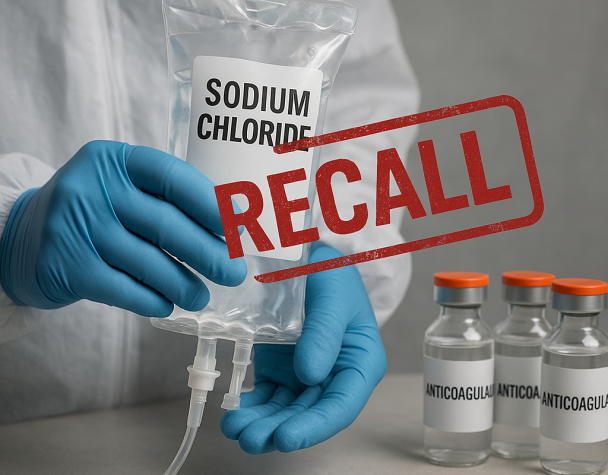
Baxter Issues Multiple Voluntary Recalls of IV Sodium Chloride and Anticoagulant Products Over Fiberglass Contamination
Tue, September 08, 2026Baxter International Inc. (NYSE:BAX) on August 25, 2026, initiated voluntary nationwide recalls for two of its injectable products due to potential contamination with fiberglass particles, according to the company’s announcement and FDA disclosures.
Specifically, Baxter is recalling two lots of its 0.9% Sodium Chloride Injection in 500 mL VIAFLEX containers. The lots, coded Y495523 and Y495523A, expire October 31, 2027, and were distributed to healthcare providers and distributors from July 31 through August 3 across numerous U.S. states including Florida, Illinois, North Carolina and Texas. The recall was publicly announced by Baxter on August 25 and posted by the Food and Drug Administration (FDA) on August 26, 2026. As of the announcement date, no adverse events had been reported.
Simultaneously, Baxter recalled one lot of its Anticoagulant Sodium Citrate Solution (250 mL VIAFLEX container), citing the same risk of fiberglass particulate. The recall notification for this product also occurred on August 25, 2026.
Health Risks and Response
The company’s recall communications underscore that intravenous administration of solutions containing fiberglass particulate matter poses serious health risks. These include the potential for vascular blockages leading to pulmonary embolism or organ damage, vein irritation, inflammation, infections, or allergic reactions. Baxter emphasized the gravity of these risks even though no related injuries have been reported to date.
Healthcare facilities and distributors are advised to immediately discontinue use of the affected lots and follow return procedures outlined by Baxter. The company is proactively contacting customers via email with instructions on product identification and return logistics.
Implications for Baxter and Stakeholders
These recalls pose operational and reputational challenges for Baxter, a major player in the medical technology sector. While the affected products represent only a minor portion of Baxter’s broader portfolio, recalls that involve potential patient harm are closely scrutinized. The swift and transparent response may help contain immediate fallout, but long-term impacts will depend on Baxter’s investigation outcomes and any subsequent corrective actions.
Shareholders, healthcare providers, and institutional buyers should monitor further updates from Baxter that detail root causes, manufacturing reviews, and any potential extensions of the recall. Importantly, there is currently no verified connection between the recall and any share-price movement. Any attribution of market reaction to the recalls would require explicit support from reliable financial reporting.
Key Next Steps to Monitor:
- Baxter’s disclosures about investigation findings and preventive measures to avoid future occurrences.
- Updates from the FDA regarding recall escalation or termination notices.
- Potential class actions or healthcare provider responses if adverse outcomes surface.
- Baxter’s Q3 earnings or investor commentary discussing recall-related costs or guidance implications.
This recall serves as a concrete reminder of the critical importance of quality control in injectable medical products and is a developing story that investors and healthcare stakeholders should watch closely.