
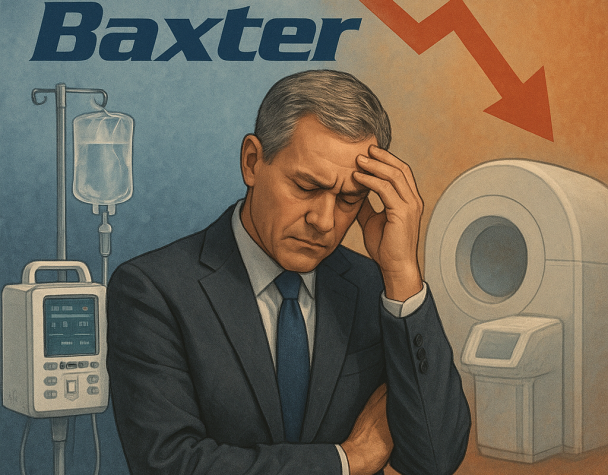
Baxter International Faces Challenges Amidst MedTech Industry Shifts
Tue, July 07, 2026Baxter International Faces Challenges Amidst MedTech Industry Shifts
Baxter International Inc. (NYSE: BAX), a leading player in the medical technology sector, is navigating a series of operational challenges and industry transformations that have significantly impacted its financial performance and market position.
Financial Performance and Market Response
In the first quarter of 2026, Baxter reported sales from continuing operations of $2.7 billion, marking a 3% increase on a reported basis but a 1% decline on an organic basis. The company posted a U.S. GAAP diluted loss per share from continuing operations of $0.03, with adjusted diluted earnings per share at $0.36. Despite these figures aligning with internal expectations, they fell short of market forecasts, leading to a notable decline in stock value. As of July 6, 2026, Baxter’s stock price stood at $22.58, reflecting a 0.88% decrease from the previous close.
Operational Challenges and Product Concerns
Baxter’s infusion pump business has been a focal point of concern. The Novum Large Volume Pump (LVP) has faced scrutiny due to reported malfunctions, injuries, and even fatalities. A class-action lawsuit filed in December 2025 alleges that Baxter concealed significant safety defects in the Novum LVP and misled investors about its performance between February 2022 and October 2025. These allegations have raised serious questions about the company’s product oversight and regulatory compliance.
Industry Developments and Strategic Adjustments
The broader medical technology industry is undergoing significant changes. Medicare’s introduction of the ACCESS payment model aims to evaluate whether health technologies, particularly those utilizing artificial intelligence, can reduce medical costs while enhancing care quality. This shift towards outcome-based payments presents both opportunities and challenges for companies like Baxter, which must adapt to new reimbursement structures and demonstrate the efficacy of their products in improving patient outcomes.
Leadership and Strategic Initiatives
Under the leadership of CEO Andrew Hider, who joined the company in late 2025, Baxter is implementing strategic initiatives to stabilize operations and drive sustainable growth. Hider has emphasized the importance of continuous improvement and operational efficiency. However, the company has acknowledged that achieving its full potential will require time and concerted effort.
Conclusion
Baxter International is at a critical juncture, facing internal operational challenges and external industry shifts. The company’s ability to address product safety concerns, adapt to new payment models, and execute strategic initiatives will be pivotal in determining its future trajectory. Stakeholders will be closely monitoring Baxter’s efforts to navigate these complexities and restore investor confidence.