
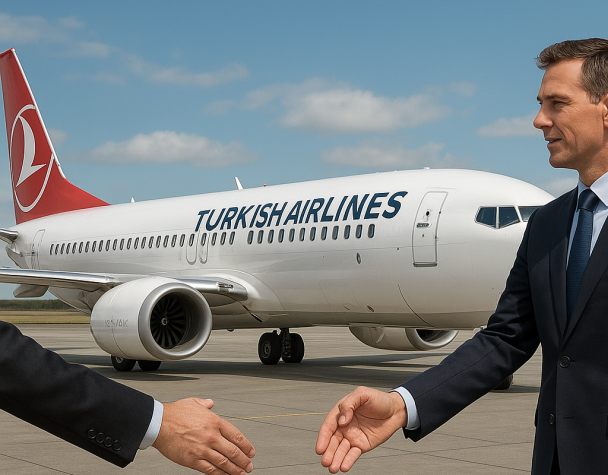
Boeing Secures Turkish Airlines Order for Up to 150 737 MAX Jets, Boosting Backlog Amid Production Recovery
Sat, September 26, 2026Boeing has finalized an agreement with Turkish Airlines for an order of up to 150 Boeing 737 MAX jets. Announced on September 23, 2026, this marks one of the largest single-aisle orders Boeing has secured in recent months and comes as the company progresses through certification milestones and production ramp-up efforts.
The deal, disclosed via PR Newswire, reflects Turkish Airlines’ intent to bolster its short- and medium-haul network, leveraging the efficiency of the 737 MAX. The specifics of the order—including a firm portion versus options—were not detailed in publicly available materials.
This development arrives amid Boeing’s broader efforts to advance certification of the 737 MAX family, notably the 737 MAX 7 and MAX 10 variants. Regulatory milestones are becoming increasingly attainable, with recent reports indicating completion of flight testing and substantive progress in certification deliverables. Boeing continues aiming for full FAA approvals and is targeting deliveries to begin in 2027 for these models.
The order signals renewed demand for Boeing’s commercial offerings during a production recovery period strained by delays and past safety issues. It serves to bolster Boeing’s backlog at a time when capacity expansion—including new assembly lines—is supporting increased output of narrowbody jets.
Investor Implications: Market Reaction and Production Outlook
While the Turkish Airlines order represents a material boost to Boeing’s future delivery pipeline, concrete impacts on the company’s share price and valuation will depend on execution—particularly certification, production ramp-up, and delivery timing.
Investors should monitor whether this order includes firm-delivery commitments or remains largely optional. Clarity on deposit payments, financing terms, and customer-specific customization will influence the order’s near-term and long-term financial significance.
Additional context comes from Boeing’s certification advancements and the reopening of production capacity, which together will determine its ability to convert backlog into revenue. As Boeing progresses toward regulatory approvals and delivery readiness for new MAX variants, the company’s commercial momentum may strengthen—provided operational execution aligns with expectations.
Key factors to watch:
- Official breakdown of the Turkish Airlines deal—number of firm orders versus options, delivery windows, and payment structure.
- Progress on FAA certification for the 737 MAX 7 and MAX 10, including public confirmation of approval.
- Updates on manufacturing capacity and actual delivery performance as Boeing scales commercial operations.
This Turkish Airlines agreement underscores Boeing’s continued recovery in the commercial jet market. It illustrates strengthening airline demand for updated narrowbody aircraft and reflects confidence in Boeing’s ability to navigate certification and delivery challenges.