
Boeing $8.6B F-15IA Win Boosts BA; Starliner Cut
Wed, December 31, 2025Introduction
Last week delivered several definitive events that moved Boeing’s (BA) risk-reward picture: a large Pentagon-backed aircraft sale, geopolitical friction with China, program-level adjustments from NASA, a congressional funding reprieve, and strong satellite delivery results. Each item carries tangible implications for revenue, backlog, investor sentiment, and near-term stock performance.
Defense Win: $8.6B F‑15IA Award Strengthens Backlog
Contract specifics and immediate impact
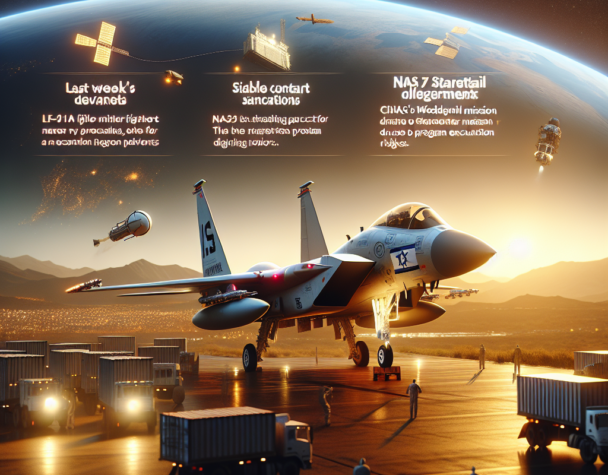
The U.S. Department of Defense awarded Boeing an approximately $8.6 billion contract to supply 25 F‑15IA fighters to Israel, with an option for 25 additional aircraft. The contract includes design, integration, testing and deliveries, with an initial funding tranche of roughly $840 million and scheduled completion in the 2030s. That kind of multi-year, high-value award directly bolsters Boeing’s defense backlog and offers predictable revenue streams over the coming decade.
What investors priced into BA stock
Equity markets reacted positively: Boeing shares experienced a measurable uptick following the announcement. The award reduces short-term earnings uncertainty tied to defense demand and supports the narrative that Boeing’s military franchise can meaningfully offset cyclicality in commercial aviation. For portfolio managers focused on cash flow visibility, the contract is a significant vote of confidence.
Space Programs: Starliner Reduction and Satellite Momentum
NASA scales back Starliner commitments
NASA revised its Commercial Crew agreement with Boeing, converting two of the previously firm Starliner missions into options and confirming only four missions under the primary contract. The program has accumulated cost overruns and schedule slips over many years, and Boeing’s next Starliner flight is not expected earlier than April 2026. While Starliner represents a smaller slice of Boeing’s overall revenue pie, the contract adjustment is a reputational and program-execution red flag that investors track closely.
Satellite deliveries offer counterbalance
On the positive side, Boeing’s Space Mission Systems reported its highest satellite delivery count in decades, filling orders for both commercial and national-security customers. Strong satellite throughput demonstrates production scaling and engineering execution in Boeing’s space business—an encouraging offset to Starliner challenges that supports longer-term growth potential in space systems.
Program Support and Geopolitics
E‑7 Wedgetail rescued by Congress
Congress intervened to preserve funding for Boeing’s E‑7 Wedgetail airborne early warning program after per-unit cost estimates rose substantially. Lawmakers approved supplemental funding that effectively prevents program cancellation, securing near-term defense revenue and maintaining production lines despite Pentagon concerns about cost escalation. That intervention reduces downside risk tied to program termination while highlighting ongoing cost-control issues.
China sanctions are symbolic but politically meaningful
China imposed sanctions on several U.S. defense contractors, including a Boeing defense unit, in response to a U.S. arms sale to Taiwan. Given Boeing’s limited defense commercial exposure to China, the sanctions are largely symbolic and produced little direct financial impact. However, they underscore geopolitical risk and the potential for politically driven restrictions that could affect parts of Boeing’s global supply and partnership networks over time.
Integrated investor takeaways
The week’s developments create a nuanced picture for BA stock. The $8.6 billion F‑15IA award and congressional preservation of the E‑7 program increase revenue visibility and support the defense case for Boeing. Record satellite deliveries further strengthen the company’s space credentials. Counterbalancing those positives are the practical impacts of NASA’s Starliner contract reduction and the continued spotlight on cost overruns and schedule delays.
Net effect: near-term support for Boeing’s share price tied to concrete defense wins and program funding, tempered by persistent execution risks in crewed spaceflight and certain complex defense programs. For investors, the story is less about a single headline and more about portfolio diversification within Boeing’s businesses—defense and space are absorbing some pressure from commercial and program-level setbacks.
Conclusion
Concrete events last week—most notably the $8.6 billion F‑15IA sale—meaningfully improve Boeing’s revenue visibility and provided an immediate boost to BA stock. At the same time, NASA’s recalibration of Starliner missions and ongoing cost-performance issues keep execution risk elevated. Congressional action on the E‑7 program and a strong cadence of satellite deliveries add important upside levers. Collectively, these developments favor a cautiously constructive stance on Boeing: solid defense and space tailwinds offset, but do not yet eliminate, program execution headwinds.