
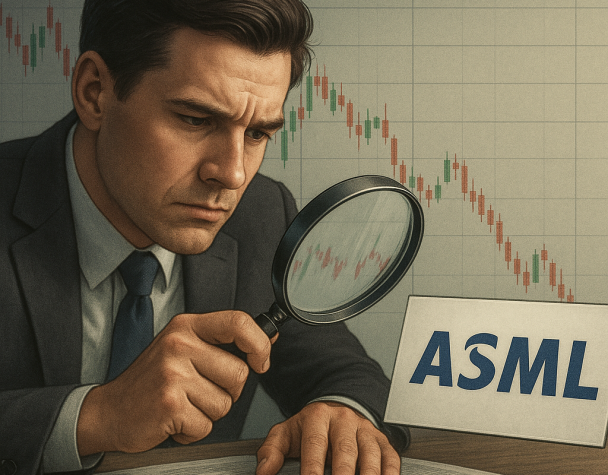
U.S. Export-Control Inquiry Puts ASML Stock Under Scrutiny
Tue, September 08, 2026This week, semiconductor equipment maker ASML came under renewed market scrutiny after reports emerged that U.S. authorities are investigating whether one of its most advanced lithography systems may have been shipped to China in breach of export restrictions. The development added fresh regulatory uncertainty for the Nasdaq‑100 component.
According to a Bloomberg-sourced report published earlier this week, U.S. officials are examining whether an ASML EUV (extreme ultraviolet) lithography machine—among the most advanced in its class—improperly ended up in China despite export control policies. The news weighed on the company’s stock, reflecting investor concern over the probe and its broader implications for export compliance. In response, ASML did not immediately offer comment.
The investigation underscores the heightened sensitivity around semiconductor exports to China, particularly for cutting-edge EUV systems that are critical to advanced chip production and tightly controlled under U.S. legislation. While no formal enforcement action or violation has been confirmed, the mere possibility triggered market nervousness.
This episode marks a rare instance of direct regulatory attention on ASML. Previously, the company had navigated a complex web of export rules stemming from Dutch, U.S., and EU policies, but without public-facing investigations at this level.
The ongoing probe serves as a reminder of the geopolitical risks embedded in the semiconductor supply chain. ASML, as the dominant provider of EUV lithography systems, plays a key role in the global chip-making ecosystem. Any interruption or legal entanglement in its operations could ripple across the industry, potentially affecting customers and partners relying on its technology for high-end logic and memory chip production.
Looking ahead, market participants will be watching closely for developments such as formal statements from ASML, clarifications from U.S. authorities, or confirmation of any export license infractions. At stake is not only the company’s compliance standing but also its critical position in enabling next-generation semiconductor manufacturing.