
Akamai $200M AI Deal Spurs Edge GPU Rollout Gains!
Mon, May 04, 2026Akamai’s $200M AI Win Sharpens Its Edge Cloud Play
In the past week Akamai Technologies (AKAM) provided fresh, material details about a four-year, roughly $200 million AI compute agreement that underscores the company’s pivot from traditional CDN services to high-value edge AI and distributed compute. The disclosure—combined with reports that Akamai is deploying thousands of NVIDIA Blackwell GPUs across its network—has reinforced investor interest and translated into notable stock momentum and analyst activity.
Why the $200M Agreement Matters
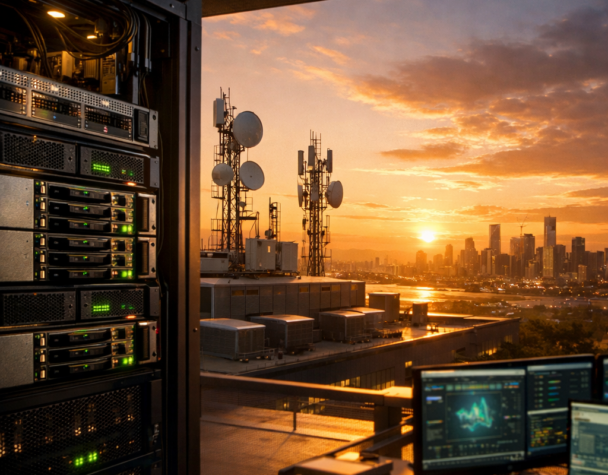
The contract is not a routine hosting deal. Akamai describes a solution that accommodates a multi-thousand GPU cluster built on NVIDIA’s latest Blackwell architecture, integrated into a distributed, low-latency fabric with NVMe-over-Fabric storage and high-density power. Structurally, this is closer to an edge-optimized supercluster than to legacy colocation.
Key technical takeaways
- Multi-thousand NVIDIA Blackwell GPUs deployed on Akamai’s edge nodes to support large-scale AI inference and training workloads.
- AI-optimized networking and NVMe-over-Fabric storage to reduce I/O bottlenecks and improve throughput.
- Four-year, high-value contract with a major U.S. tech customer, providing multi-year revenue visibility.
For investors, the combination of scale (thousands of GPUs) and duration (multi-year commitment) signals that Akamai can be a trusted provider for low-latency AI workloads that demand proximity to end users—something centralized cloud providers don’t always deliver.
Financial and Market Ripples
Akamai’s Cloud & Infrastructure Services unit has been accelerating. The company reported roughly 44% year-over-year growth in that segment in the most recent quarter (constant currency), a metric now reinforced by this high-value AI deal and the visible GPU rollout. Over the last six months the stock has outperformed, rising materially amid renewed investor confidence, and several analysts have either reiterated or raised price targets in response to these developments.
Analyst and valuation context
- Multiple sell-side firms have publicly acknowledged the deal’s significance and adjusted models to reflect larger addressable revenue from edge AI.
- Short-term share moves appear driven by the higher-margin nature of AI compute and the perceived defensibility of Akamai’s distributed network.
While Akamai’s market cap remains mid-cap scale relative to hyperscalers, the company’s differentiated offering—low-latency edge delivery plus egress-cost advantages—creates a compelling value proposition for certain AI workloads.
Competitive and Execution Considerations
Securing a marquee AI customer and deploying Blackwell GPUs are meaningful steps, but execution risk persists. Large-scale GPU deployments are capital intensive and require precise operational orchestration across power, cooling, and networking. Akamai must also demonstrate the ability to onboard additional customers beyond the anchor deal to fully monetize invested capacity.
How Akamai’s edge approach stacks up
- Advantage: Low-latency proximity to end users and broader geographic footprint compared with centralized hyperscalers.
- Challenge: Hyperscalers continue to dominate large cloud commitments and can cut prices on centralized compute; Akamai must win workloads where edge latency or egress costs materially matter.
In short, the technical depth of the announced solution is a strong proof point—but converting that proof into recurring, diversified revenue will determine long-term upside for AKAM stock.
Investor Implications
For investors focused on thematic AI infrastructure exposure, Akamai now presents a differentiated way to play edge AI: exposure to GPU-accelerated compute close to users rather than more centralized data-center plays. Short-term, expect volatility as the market prices execution milestones: additional customer wins, utilization rates of GPU capacity, and margin expansion in Cloud & Infrastructure Services.
Pragmatically, key data points to watch in coming quarters include GPU utilization metrics, incremental backlog or contract announcements, and margins in the cloud segment. Those indicators will reveal whether the $200M agreement is an isolated win or the start of broader traction.
Conclusion
Akamai’s disclosure of a four-year, $200 million AI compute agreement and the reported deployment of thousands of NVIDIA Blackwell GPUs materially advances its edge cloud narrative. The developments validate the company’s strategic shift, help explain recent analyst optimism, and elevate execution as the primary variable for continued stock appreciation. Investors should watch utilization, additional customer commitments, and margin trends to judge whether this momentum can be sustained.
These events mark a significant step for Akamai beyond content delivery—a move toward becoming a core infrastructure player for latency-sensitive AI workloads.