
AEP $4.2B Ohio Grid Build Boosts Data-Center Power
Thu, April 16, 2026Introduction
American Electric Power (AEP) entered the headlines this week as concrete project announcements and regulatory developments crystallized the company’s role in powering large-scale data-center growth in Ohio. Two themes dominate: a substantial Appalachian Ohio transmission investment that aligns AEP with mega-scale AI and data-hub build-outs, and regulatory scrutiny over how those costs are recovered. Both are material to shareholders because they affect near-term cash flow, regulatory relationships, and long-term load growth.
What AEP Announced
$4.2 Billion Appalachian Ohio Transmission Investment
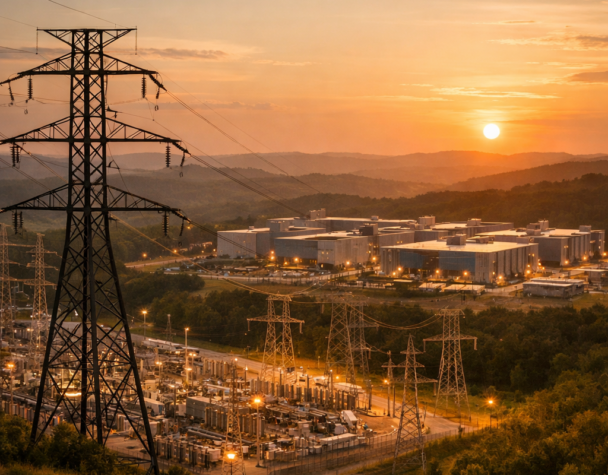
AEP Ohio revealed a $4.2 billion infrastructure program focused on Appalachian Ohio. The project—linked to efforts to repurpose the former Portsmouth Gaseous Diffusion Plant into a major data-center and AI hub—targets robust transmission upgrades to deliver reliable, high-capacity power to new customers. Management structured elements of the plan to avoid immediate rate increases for residential customers, a key concession when seeking regulatory and public support.
Expanded Load Forecast and Incremental Projects
Alongside the Appalachian investment, AEP disclosed a materially larger secured load pipeline: secured incremental load has been increased to roughly 56 GW by 2030, up from about 28 GW in recent months. That expansion is driven primarily by signed electric service agreements with hyperscalers and data-center operators. The company also flagged an additional $5–$8 billion in potential projects beyond its existing $72 billion five-year capital plan, and reported adding roughly 2.2 GW of generation in 2025.
Regulatory and Earnings Implications
FERC Review of Cost Recovery
Regulatory scrutiny has emerged as a tangible near-term risk. Ohio stakeholders and consumer groups have pushed back on AEP’s proposed cost-recovery approach for large transmission projects—particularly where costs could be allocated in ways critics say might shift a disproportionate burden to residential ratepayers. The dispute has attracted attention at the Federal Energy Regulatory Commission (FERC), which is now reviewing aspects of the proposed structure. Outcomes from that process could influence project economics and the timing of approved recoveries.
Balancing Growth and Ratepayer Protections
AEP’s strategy attempts to thread an uncommon needle: enable high-growth commercial demand (data centers) while protecting residential customers from immediate bill impacts. For investors, this reduces political friction and increases the chance of favorable regulatory outcomes—if the protections are credible and adequately enforced. However, any required concessions or reallocated cost burdens could affect return profiles on those investments.
Capital Deployment, Dividends, and Corporate Moves
Even as AEP expands capital commitments, the company continues to prioritize income stability. The board declared its regular quarterly cash dividend of $0.95 per share, reinforcing a predictable yield for income-focused investors. Operationally, AEP appointed Brian Abraham as President and COO of Appalachian Power to help manage regional execution, signaling an emphasis on leadership that can handle accelerated buildouts and stakeholder engagement.
Why This Matters to Investors
- Revenue and load growth: Signed agreements underpinning the 56 GW forecast provide visibility into future earnings if projects are completed and energized.
- Execution risk: Large transmission builds carry construction, permitting, and supply-chain risks that can affect timelines and returns.
- Regulatory risk: FERC and state reviews of cost-recovery frameworks can alter allowed returns or shift cost burdens, impacting near-term cash flow.
- Political and consumer optics: Structuring projects to protect residential rates improves the likelihood of regulatory approvals but may compress margins.
Conclusion
Last week’s concrete developments make AEP’s growth thesis more tangible: the company is positioning itself as essential infrastructure for the data-center and AI build-out in Ohio, backed by signed load agreements and multibillion-dollar transmission plans. That opportunity comes with measurable regulatory scrutiny and execution needs. For investors, the trade-off is clear—accelerated load and revenue potential versus near-term regulatory risk and incremental capital deployment. AEP’s steady dividend and targeted leadership moves offer stabilizing counterweights as the company scales into this next phase.
Note: This article synthesizes recent company announcements and regulatory updates affecting AEP and is intended for informational purposes. It does not constitute investment advice.