
WWDC Reaction, MacBook Neo & India Boost AAPL Now!
Wed, June 10, 2026WWDC Reaction, MacBook Neo & India Boost AAPL Now!
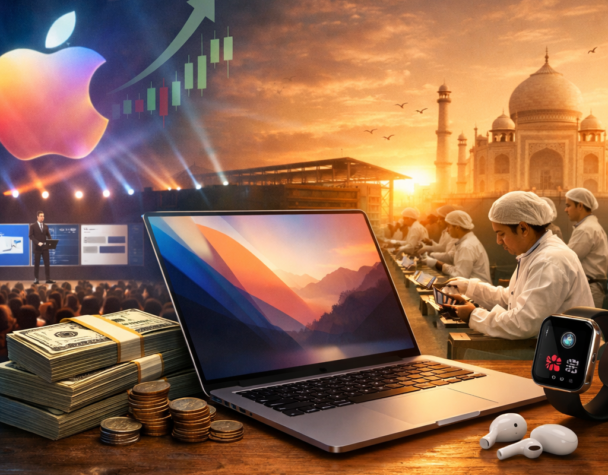
Apple’s stock experienced a volatile week driven by mixed signals: investor disappointment with WWDC software updates pushed shares downward, while simultaneous hardware and corporate actions offered concrete offsets. Key developments — the MacBook Neo debut, a $24 billion buyback, a continued shift of iPhone assembly to India, and the restoration of a blood-oxygen feature on Apple Watch models — combined to shape short-term sentiment and longer-term fundamentals for AAPL in the DJ30.
Market Reaction to WWDC
Immediate stock moves
WWDC centered on iOS and macOS refinements and enhancements to Apple’s AI roadmap. Market response favored substance over buzz: investors perceived the announcements as evolutionary rather than revolutionary. The result was a notable pullback from a recent intraday high above roughly $317 to levels under $300, reflecting the market’s hunger for dramatic AI or hardware breakthroughs rather than incremental software improvements.
Why investor disappointment matters
In today’s environment, big tech valuations are especially sensitive to transformative narratives—AI leadership, new hardware categories, or unexplored revenue streams. When a major event like WWDC fails to deliver a clear, scalable catalyst, share prices can swing as capital reallocates to names promising quicker, more visible growth. That said, headline-driven volatility does not erase structural positives that are unfolding for Apple.
Hardware and Capital Returns: MacBook Neo and the Buyback
MacBook Neo targets affordability
Apple’s new MacBook Neo, positioned at an accessible $599, aims at education and first-time Mac buyers. Early estimates suggest shipments could hit 4–5 million units in the first year, a meaningful infusion for the Mac line that helps diversify revenue beyond the iPhone. The Neo’s strategy resembles a wedge play: capture entry-level demand now and create upgrade paths to higher-margin models later.
$24 billion buyback: cushioning EPS
Concurrently, Apple announced a $24 billion stock buyback. Buybacks reduce share count and can support EPS and stock valuation while management navigates product cycles. For investors, this moves some risk from operational execution to capital return policy — a stabilizer during periods of product-driven uncertainty.
Supply Diversification: iPhone Production in India
Progress on manufacturing shifts
Apple’s ongoing ramp of iPhone assembly in India continued to gain traction this week, with estimates indicating roughly a quarter of iPhones are now assembled there. This geographic diversification reduces reliance on a single manufacturing base, mitigates tariff and geopolitical risk, and improves supply-chain resilience — all factors that support more predictable margins over time.
Long-term operational benefits
Scaling production in India also positions Apple to capitalize on local demand and government incentives. Over time, the mix shift can lessen exposure to China-centric disruptions and provide Apple with greater flexibility in global pricing and sourcing strategies.
Wearables & Accessories: Restored Features and Sustainability Trends
Apple Watch blood‑oxygen reinstated
After legal and regulatory headwinds, Apple restored the blood‑oxygen measurement feature via a software update for U.S. Apple Watch Series 9, Series 10, and Ultra 2 models. Reinstating health capabilities not only repairs product functionality but also reinforces the Watch’s role as a health and wellness hub — an important narrative for wearable pricing power and attach rates.
Accessory innovation and right-to-repair
Accessory demand is evolving toward sustainability and modularity. California’s right-to-repair movement and similar regulatory changes are encouraging replaceable parts and longer-lived accessories. Apple’s circular-economy initiatives — trade-ins and refurbished accessory programs — align with these trends, offering incremental revenue while appealing to environmentally conscious consumers.
Conclusion
This past week illustrated the dual nature of Apple’s investment case: near-term volatility driven by event-level sentiment at WWDC contrasted with tangible, strategic progress across hardware, manufacturing, corporate finance, and product functionality. The MacBook Neo and the $24 billion buyback provide immediate, measurable support; India-based assembly improves structural resiliency; and restored health features plus accessory initiatives sustain the ecosystem’s stickiness. For investors, these concrete developments temper the headline-driven swings and underscore several pragmatic levers management is using to protect growth and margins.
Short-term traders will watch follow-through from WWDC and initial MacBook Neo sales; longer-term investors may find the shifts in production, buybacks, and wearable functionality to be more significant when assessing Apple’s capacity to navigate the next product cycle.