
Apple Warns of Deepening Supply Constraints as Memory Shortages Shadow Q4 Outlook
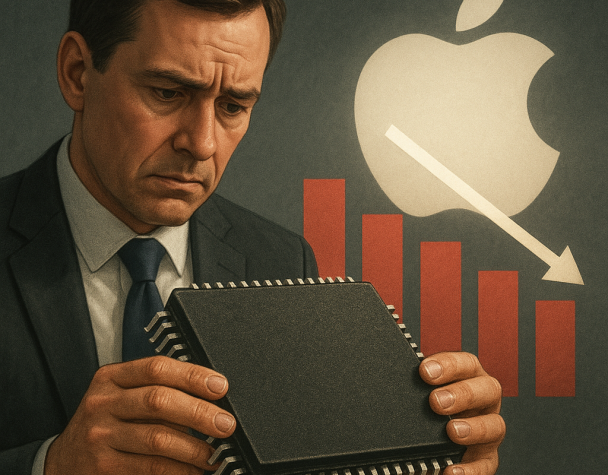
Thu, October 08, 2026Apple reported stronger-than-expected fiscal third-quarter results, with revenue of $109.42 billion and adjusted earnings per share of $2.02, surpassing analyst forecasts. However, attention swiftly shifted to the company’s outlook for the September quarter after management cautioned that supply constraints, especially in memory components, are intensifying. Market reaction was immediate, with shares slipping sharply in after-hours trading.
Quarterly Results Mask Long-Term Supply Worries
Despite the robust performance—handsets rose 22 percent and Mac revenue surged nearly 29 percent year-over-year—the earnings call underscored a growing supply crisis. CEO Tim Cook described the situation as a “hundred-year flood” in memory pricing, warning that the company’s scaled-back inventory buffer is rapidly dissipating. As AI demand pressures memory and advanced-node chip capacity, Apple faces elevated component costs and constrained flexibility in its supply chain.
Management expects memory pricing to continue rising beyond the current quarter, further squeezing margins. As a mitigation, Apple has already raised prices on Mac and iPad lines, though Cook noted iPhone prices have so far remained unchanged.
Guidance Trimmed—Stock Reacts
Apple’s forecast for September-quarter revenue growth has been revised downward to a range of 9 to 11 percent year-over-year, compared to higher analyst expectations of over 12 percent. This muted guidance prompted a 5.5 percent drop in after-hours trading, marking one of its steepest declines since 2020. Analysts warn that Apple’s leverage over its supply chain may be eroding while AI has yet to emerge as a clear offsetting tailwind.
Broader Implications: Product Availability and Pricing
Supply issues are already manifesting in product availability. Popular desktop models including the Mac mini and Mac Studio face prolonged shipping delays, as Apple struggles to meet accelerating demand. To counteract rising component costs, Apple enacted broad-based price increases across its Mac and iPad offerings, a move rarely seen at this scale in its modern history.
What Comes Next
Investors will be closely monitoring whether Apple can bolster its supply chain resilience and manage inflationary cost pressures while preparing for upcoming product launches, including the expected iPhone 18 lineup and a foldable model. How Apple navigates this memory crisis and its pricing strategy into late 2026 will be critical to restoring investor confidence.