
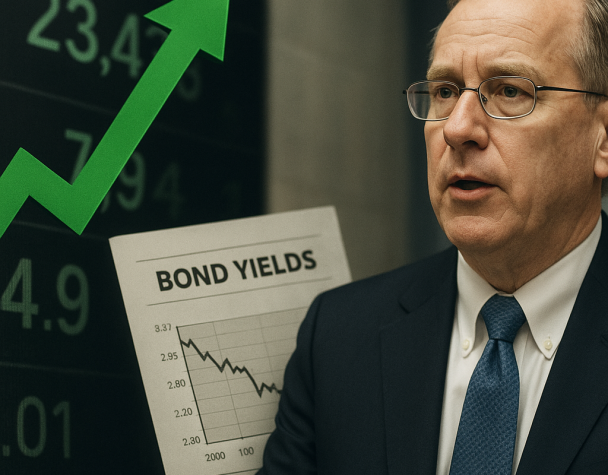
Wall Street Rebounds as Bond Yields Ease; Fed’s Waller Signals Cautious Rate Moves
Thu, September 03, 2026U.S. stocks staged a rebound on Wednesday, marking a turnaround after recent losses, as easing Treasury yields and renewed investor confidence helped propel the major indexes higher.
Markets Snap Losing Streak on Yield Relief
The S&P 500 rose approximately 0.46%, the Dow Jones Industrial Average added around 0.56%, and the Nasdaq Composite climbed about 0.45% on Wednesday, September 2. These gains ended a three-day slide for the markets. Smaller-cap stocks outperformed, with the Russell 2000 leading broader indices. These moves followed a pullback in Treasury yields, which had contributed to market pressure. Many sectors that had been oversold found renewed buying interest as investors searched for value opportunities. Air travel, precious metals and regional banks were among the best-performing sectors, while software and services lagged amid ongoing concerns about the impact of AI disruption.
The pickup in equities accompanied signs of easing financial stress, including a pause in the relentless bond sell-off and improved sentiment after sharp losses tied to geopolitical risks.
Fed’s Waller Signals Patience on Rate Hikes
Federal Reserve Governor Christopher Waller offered a more nuanced outlook on monetary policy, indicating that the upcoming August inflation report—due September 11—would heavily influence whether he supports a rate hike later this month. He stated that if inflation continues to cool, he “would be inclined” to hold rates steady. But he added that a hotter-than-expected reading would prompt him to consider tightening policy. Markets reacted favorably, with equities climbing and bond yields retreating following his comments.
Waller’s remarks suggest the September 15–16 Federal Open Market Committee meeting is not yet prescriptive, reinforcing expectations that the central bank could hold off on further tightening if inflation metrics continue to improve.
What This Means for Investors
The combination of receding Treasury yields and a more cautious Fed tone has helped buoy U.S. equities, particularly after days of volatility. Investors are likely to closely monitor the August inflation report—as well as any reaction from the Fed—to assess whether the softening in yields and relief rally have legs.
In the near term, sectors sensitive to interest rates—including financiers, industrials, and real estate—could continue to benefit from easing borrowing costs. Meanwhile, the uncertainty around inflation data and geopolitical tensions remain key risks to watch.
Looking Ahead
The markets will now turn their attention to upcoming inflation data, which could be a make-or-break moment for Fed policy expectations. A cooler print may reduce pressure on rate-sensitive sectors, whereas hotter numbers could reignite bond-market volatility and weigh on equities. Geopolitical developments, especially in the Middle East, also remain on the radar for their potential to disrupt energy markets and inflation dynamics.