
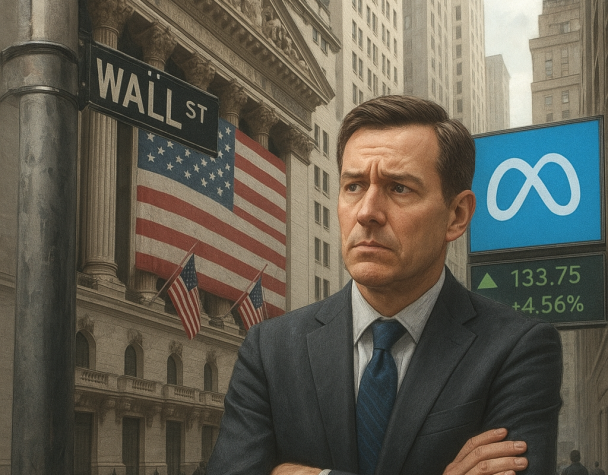
Wall Street Pauses Amid Middle East Tensions as Meta Shares Rally
Fri, September 25, 2026The U.S. stock market treaded cautiously in the latest session, with the S&P 500 ending nearly flat amid Middle East tensions, while financial stocks slipped due to growing concerns over AI competition and a flattening yield curve.
Equities Stay Grounded Amid Middle East Unrest
The S&P 500 closed marginally lower, navigating a tight trading range as markets grappled with geopolitical headwinds. Investors reacted to renewed uncertainty about the U.S.–Iran conflict, which weighed on oil and Treasury yields. A Reuters report noted both U.S. and Iranian officials are considering a phased easing of hostilities through mechanisms like reopening the Strait of Hormuz and lifting economic restrictions—offering a glimmer of hope late in the session. This diplomatic development spurred a partial rebound from session lows. Meanwhile, Brent crude prices surged over 3%, nearing $107 per barrel, as missile attacks rekindled concerns over supply disruptions. The rebound in equities from early declines underscores how diplomacy can help stabilize sentiment, even amid geopolitical frictions.
Financial Shares Slide as AI Competition Heats Up
Meanwhile, financial stocks faced pressure earlier in the week, with the S&P 500 Financials index sliding roughly 2%. Key names such as Charles Schwab, Ameriprise Financial, and Raymond James each dropped notably, with Schwab down about 6.1%. The downturn stemmed from fears around rising competition from AI-powered platforms and uncertainty over AI-related IPO activity. Additionally, shifts in the bond market suggesting a flattening yield curve dampened optimism for bank earnings, which depend heavily on net interest margin expansion. Investors expressed concern that AI developments could threaten traditional wealth management and brokerage models.
What It Means for Investors
The dual themes of geopolitical unease and technology-driven disruption paint a nuanced picture for U.S. equities. The S&P 500’s stability despite elevated oil and bond yields suggests investors are anchoring on hope for diplomatic resolution. Conversely, the weakness in financials highlights how AI innovation can upend established business models—even in sectors not directly tied to technology.
Looking ahead, investors will monitor developments in U.S.–Iran diplomacy, oil market responses to supply risks, and further AI-related shifts in financial services. A breakthrough in talks could ease oil and rate concerns, while successful AI integration by banks might restore confidence in the sector’s resilience.