
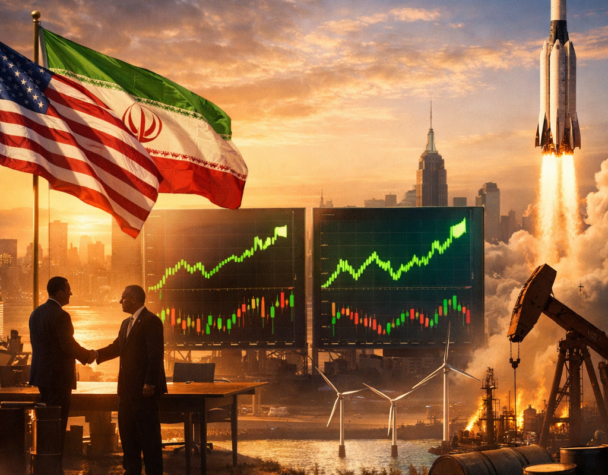
U.S.–Iran Peace Pact Sparks S&P, Nasdaq Rally Now!
Tue, June 16, 2026Introduction
A surprise diplomatic development — a preliminary U.S.–Iran peace pact announced on June 15, 2026 — triggered a swift rotation in equities. Risk-on assets rallied, energy and oil gave back earlier strength, and high-profile IPO and AI exposures continued to attract investor interest. The move underlines how geopolitical shifts still drive short-term flows across major indexes such as the S&P 500, Nasdaq, and Dow 30.
Immediate market reaction
Index moves
Within hours of the announcement, major indexes swung higher. Reports indicated the Nasdaq climbed sharply on Monday (roughly a 3% gain), while the S&P 500 and Dow 30 also posted gains. Context from the prior session matters: on Friday the S&P 500 rose about 0.5%, the Dow added roughly 0.7% and the Nasdaq advanced near 0.3%, illustrating that the diplomatic news accelerated an existing bid for equities.
Sector shifts and standout names
Sectors displayed clear divergence. Airlines and travel-related stocks surged as geopolitical risk premium eased. Conversely, energy names and oil-service companies fell after Brent crude prices were reported to drop about 3.4%—a meaningful one-day move for oil. Separately, the highly watched SpaceX IPO continued to show strong investor appetite, jumping roughly 19.2% in recent trading, highlighting persistent demand for large-cap and AI-related growth exposures.
Why the response was so pronounced
Geopolitics, risk premia, and flow mechanics
Equity investors price geopolitical risk into valuations through two channels: the premium demanded for uncertainty and the direct macro effects (energy supply, trade disruptions, defense spending expectations). A credible de-escalation reduces the risk premium, boosting cyclical sectors that benefit from higher mobility and trade. In short, fewer headline risks prompt reallocations from defensive to cyclical and growth-oriented holdings.
Oil’s outsized influence
Oil moves can amplify equity sector rotations. The reported 3.4% fall in Brent had a twofold impact: it trimmed profit expectations for energy firms and lowered input-cost worries for transport and manufacturing—both supportive for industrial and consumer discretionary names. When oil reverses sharply, investors often reprice both individual sectors and broader indices.
Broader themes: IPO momentum and AI demand
Beyond geopolitics, structural themes remained influential. The SpaceX IPO’s sizable jump underscored investor hunger for large-scale growth stories tied to technology and AI infrastructure. Even amid geopolitical-driven swings, the persistent appetite for AI-linked assets and marquee IPOs helped underpin gains in the Nasdaq and other growth-oriented benchmarks.
Practical takeaways for investors
- Monitor conviction, not headlines: Short-term geopolitical news can produce rapid price moves. Confirm fundamentals before repositioning—sector rotations often retrace as details emerge.
- Use sector hedges: If you have exposure to energy, consider trimming positions or adding hedges when oil exhibits large, headline-driven moves. Conversely, travel and leisure exposures can benefit from easing geopolitical risk.
- Size IPO and growth bets carefully: Strong initial performance (e.g., SpaceX) is not a guarantee of long-term returns. Manage position sizes and consider lock-up and volatility risks.
- Watch macro data and Fed signals: Geopolitical relief can lift risk assets, but central-bank commentary and inflation prints ultimately govern sustained trends for the S&P 500 and Nasdaq.
Conclusion
The U.S.–Iran preliminary agreement on June 15 acted as a catalyst for a clear risk-on repricing: major indexes rallied, energy and oil fell, and high-profile growth stories like the SpaceX IPO continued to attract capital. For investors, the episode is a reminder that geopolitical developments remain potent short-term drivers—use disciplined position sizing, watch correlated commodity moves, and confirm that tactical changes align with long-term portfolio objectives.