
Oil Spike, Geopolitics Hit; Nvidia's Shares Slide!
Mon, March 02, 2026Oil Spike, Geopolitics Hit; Nvidia’s Shares Slide!
Equity desks opened the week re-pricing risk after a sharp geopolitical escalation that tightened energy flows and pushed crude sharply higher. The squeeze in oil and renewed geopolitical risk rattled S&P 500, Dow Jones and Nasdaq futures, while company-specific headlines — most notably Nvidia’s post-earnings drop and a high-profile leadership exit at Berkshire Hathaway — amplified sector rotation. This article unpacks the concrete events driving index moves and where investors have been moving capital in response.
Major Movers: Events That Drove the Tape
Geopolitical escalation and the oil shock
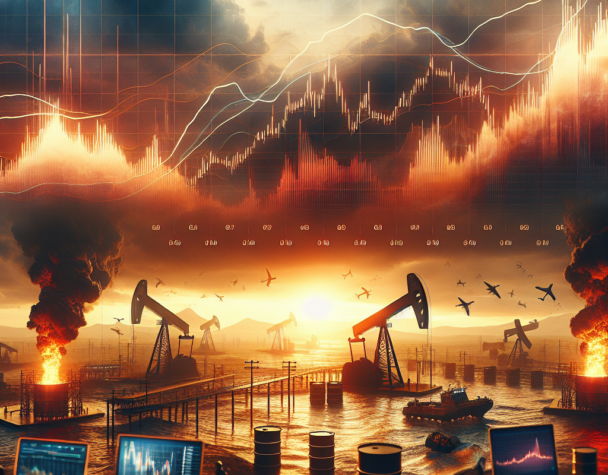
Late-week military actions between the U.S., Israel and Iran culminated in the temporary closure of the Strait of Hormuz, a critical chokepoint for global oil shipments. The immediate consequence was a sharp jump in crude prices — roughly a 7% move — and futures for the Dow, S&P 500 and Nasdaq opening more than 1% lower on the news. When energy supply channels are threatened, the impact is twofold: direct pressure on inflation expectations and a higher cost base for energy-intensive sectors, both of which get discounted into equity valuations.
Tech volatility: Nvidia’s decline despite strong results
Nvidia reported strong quarterly revenue and upbeat guidance but still suffered a steep one-day drop of about 5.5%. That decline underscored how stretched sentiment can be in AI-related names: even positive fundamentals may be punished when positioning is crowded or investors re-assess forward multiples. The immediate fallout weighed on the Nasdaq (roughly a 1.2% slide) and dragged the S&P 500 modestly lower (around 0.5%), demonstrating how a handful of mega-cap tech names can swing broad indices.
Corporate Signals and Sentiment Shifts
Berkshire leadership change and investor psychology
Warren Buffett’s resignation as CEO of Berkshire Hathaway—announced alongside a softening in quarterly operating profit—served as a sentiment shock for value-oriented capital. Buffett’s departure altered positioning for some long-term holders and drew attention to governance and succession risks at one of the world’s largest conglomerates. Such headlines can accelerate rotation out of perceived safety anchors and into either cyclicals or defensive “hard-asset” names.
Salesforce buyback highlights capital-return impact
In contrast to headline-driven losses, Salesforce’s earnings beat plus a $50 billion buyback and dividend increase lifted its shares. This episode reinforces a practical market truth: sizable buybacks and direct returns to shareholders can offset broader risk-off flows, at least temporarily, by reducing float and signaling management confidence in future cash generation.
Sector Winners, Losers and Tactical Positioning
Investors reacted to the dual shocks — geopolitics and tech re-rating — by rotating into different buckets. Memory and semiconductor equipment stocks (e.g., select chipmakers and memory vendors) showed relative resilience as demand narratives for AI infrastructure remain intact. Meanwhile, so-called HALO (heavy assets, low obsolescence) names — firms with tangible assets and stable demand profiles — attracted safe-haven interest. Equal-weight ETFs saw better relative performance versus cap-weighted benchmarks, illustrating a breadth trade where large-cap concentration creates idiosyncratic volatility.
Risk implications for indices
The combination of energy-driven inflation fears and concentrated tech exposure means indices can diverge quickly. When oil and geopolitical risk dominate, cyclical and energy stocks may outperform; when AI enthusiasm returns, mega-cap techs can snap back and reassert leadership. Recent sharp moves — including a widely circulated AI-recession scenario that triggered an outsized Dow selloff — show how narratives alone can amplify flows, even if they are hypothetical.
Takeaways
Last 24-hour developments were concrete and impactful: a supply-driven oil shock from Strait of Hormuz disruption, Nvidia’s surprising post-earnings selloff despite strong numbers, and major corporate moves that reshaped sentiment. For investors, this period underlines the importance of monitoring geopolitical risk, concentration in headline tech names, and corporate capital-return decisions — all of which can create rapid index rotation and opportunities for tactical rebalancing.
Positioning that balances exposure to resilient earnings, energy sensitivity and diversified tech exposure can help navigate the current environment. Active risk management — using hedges, trimming overconcentration and tracking liquidity — remains prudent while headlines dominate price action.