
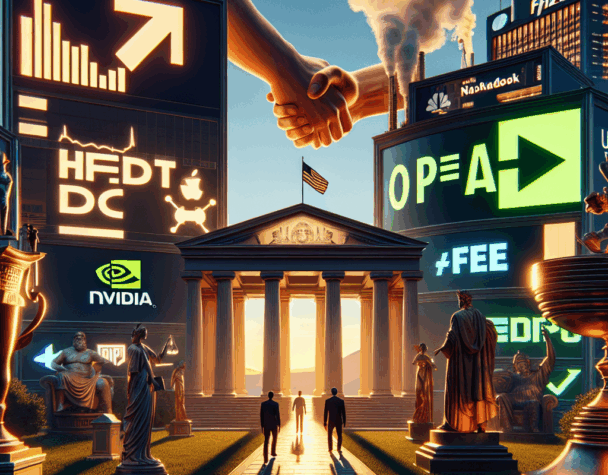
Nvidia-OpenAI Deal Lifts Indexes; Apple Rally Now!
Tue, September 23, 2025U.S. large-cap benchmarks closed higher after a pair of concrete corporate developments gave investors fresh reasons to buy into the concentrated tech leaders. The driver was a confirmed strategic commitment between Nvidia and OpenAI that expands AI infrastructure spending, paired with a bullish analyst revision on Apple’s handset outlook. Those two forces powered gains in the S&P 500, Nasdaq and the Dow, with major indices posting new closing highs.
How the Nvidia–OpenAI pact moved the tape
Nvidia announced a deepening of its commercial ties with OpenAI, signaling multi‑year commitments to deploy significant GPU capacity and align product roadmaps to the generative AI demand curve. That explicit AI infrastructure demand removes a layer of uncertainty for Nvidia’s near‑term revenue trajectory and gives suppliers and software partners clearer visibility into capital spending.
Index-level impact
Because the U.S. benchmarks are heavily weighted toward mega‑cap tech, a renewed, measurable AI spending plan leans directly into index performance. When a dominant component like Nvidia gets a visible growth catalyst, index returns can amplify—both through that company’s direct weighting and via spillover optimism across the AI supply chain.
Practical investor takeaway
For equity holders, the news increases conviction in AI‑exposed names and supports expectations for stronger earnings in related hardware, cloud services and middleware. Active managers should watch capex cadence, deployment timelines and any contract specifics that tighten Nvidia’s revenue visibility into the next 12–24 months.
Apple upgrade and policy headlines that mattered
Separately, a notable analyst upgrade on Apple—driven by better‑than‑expected handset demand—helped sustain the rally. As with Nvidia, Apple’s outsized index weights mean bullish developments there lift aggregate benchmark readings.
Fed comments: a check on the easy-money narrative
Several Federal Reserve officials reiterated caution about moving too quickly toward lower rates despite recent easing hopes. Those remarks temper the near‑term policy relief narrative and remind investors that the path to lower borrowing costs is still conditional on incoming inflation and jobs data.
H‑1B clarification reduces operational risk for tech firms
An initially alarming proposal around a high, one‑time H‑1B fee was narrowed in follow‑up guidance: the payment applies to certain new petitions rather than to all existing visa holders or routine renewals. That clarification pared back immediate regulatory risk for large tech employers that rely on imported talent, and reduced headline‑driven volatility for many Nasdaq names.
Healthcare consolidation and what to watch next
In healthcare, Pfizer’s announced acquisition of an obesity‑drug developer reinforces the sector’s tilt toward dealmaking in high‑growth therapeutic areas. These targeted buyouts are carving out visible winners and shaping earnings expectations for healthcare components of the S&P 500.
Short checklist for traders and investors
- Monitor earnings and guidance from Nvidia and other AI stack firms for confirmation of the stated capex cadence.
- Watch Apple sales data and carrier reports for signs the upgrade is broad‑based versus regionally concentrated.
- Follow Fed speakers and incoming CPI/PCE prints—any deviation could swing rate expectations and sector leadership.
- Track visa‑policy updates for any lingering operational effects on staffing and project timing in tech.
- Watch M&A announcements in health care for valuation implications across the sector.
Bottom line: clearly defined corporate actions—large AI infrastructure commitments and tangible product demand—drove headline index gains. The next moves will be shaped by how quickly those commitments translate to billings and whether macro commentary from policymakers shifts the interest‑rate outlook. Position sizes should reflect concentration risk: index moves can be large when a few megacaps dominate returns.