
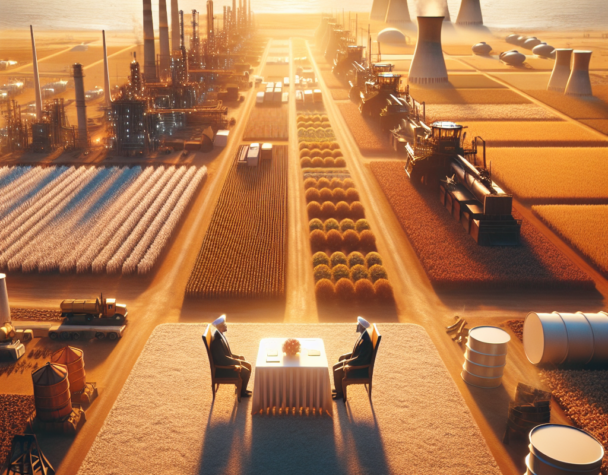
US–Iran Talks Spike Oil, Gold; Agri Tariff Risks!!
Fri, February 27, 2026Introduction
In the past 24 hours two events have produced clear, actionable implications for investors: a renewed round of U.S.–Iran nuclear talks in Geneva that has lifted oil and gold and unsettled risk assets, and focused industry reporting from the Agri-Food Europe conference in Amsterdam that flagged volatile tariff policy and shifting supply chains for agri-food commodities. Together these developments underscore how geopolitical diplomacy and trade policy moves ripple through prices and portfolios.
Geopolitical Shock: U.S.–Iran Talks and Broad Asset Moves
What happened
Diplomatic activity between the U.S. and Iran in Geneva has increased perceived geopolitical risk in energy-producing regions. In response, investors sought refuge in traditional safe havens, driving demand for gold and putting upward pressure on oil as traders price in potential supply disruptions or transport-route risk.
How investors reacted
The immediate market pattern is classic: a tilt toward safety and liquidity. Gold rallied as a hedge against geopolitical uncertainty, while oil traders re-evaluated near-term supply risk, tightening physical and futures spreads. Risk-on assets—cyclical equities, high-yield credit, and currencies sensitive to growth—saw heightened volatility as traders balanced potential diplomatic breakthroughs against the chance of escalation.
Investment implications
- Commodities: Energy and precious metals tend to outperform in early geopolitical shocks. Traders and allocators with exposure to oil producers, integrated energy names, and gold miners should watch short-term supply indicators and shipping insurance (war-risk) premiums.
- Fixed income & FX: Treasury yields may fall if investors seek safe-haven duration, while the U.S. dollar can strengthen in risk-off moves. Hedged currency strategies and duration management become relevant hedges.
- Equities: Expect sector rotation—defensive sectors (consumer staples, utilities, healthcare) often outperform initially; energy can outperform but with wider swings. Active rebalancing and disciplined stop-losses can protect downside in highly uncertain windows.
Niche Pressure: Agri-Food Trade Volatility
Key signals from Agri-Food Europe
At the Agri-Food Europe conference, industry leaders highlighted erratic tariff announcements and a shift in sourcing relationships as governments respond to geopolitical and domestic political pressures. These changes create operational uncertainty for producers, processors, and traders in the agri-food space.
Why this matters for commodity-focused investors
Agri-commodity prices and producer margins are particularly sensitive to tariff swings and export restrictions. Examples include rapid cost changes for feedgrain and oilseed buyers when duties shift, or sudden rerouting of supply chains when buyers pivot away from particular regions. For investors, this means increased basis and logistical risk, and a need to price in policy risk differently than pure supply/demand fundamentals.
Practical portfolio responses
- Diversify sourcing exposure: Investors in agribusiness equities or commodity funds should favor companies with diversified procurement and flexible logistics.
- Monitor policy calendars: Tariff review dates, trade negotiations, and announced investigations are catalysts; build a watchlist and use options or short-term hedges around those windows.
- Favor vertically integrated names: Firms that control processing, transport, and storage can insulate margins better when trade flows shift abruptly.
Cross-Asset Considerations and Risk Management
Correlation shifts
When geopolitical shocks occur simultaneously with trade-policy volatility, correlations that investors take for granted can break down. For example, energy and equities historically diverge in some shocks: energy up, growth-exposed equities down. Fixed-income safe havens and gold may move together, amplifying portfolio impacts.
Risk controls and tactical hedges
Practical steps include tightening stop-loss discipline on riskier positions, using options for downside protection, and maintaining liquidity to capitalize on dislocations. For commodity exposure, rolling short-duration hedges or using instruments tied to physical spreads can be more effective than long-dated futures during periods of policy uncertainty.
Conclusion
Recent developments—renewed U.S.–Iran talks and warnings of agri-food trade volatility—are not vague headlines but concrete catalysts that influence prices, flows, and operational risk across portfolios. Investors should respond with differentiated tactics: protect against short-term geopolitical shocks with hedges and duration management, while adjusting commodity and agribusiness exposure toward balance-sheet strength and sourcing flexibility. Staying close to policy calendars and shipping/insurance signals will provide early warning as these stories evolve.
Note: This article synthesizes recent reporting on diplomatic negotiations and industry conference takeaways; investors should combine this with their own research and risk tolerance before adjusting portfolios.