
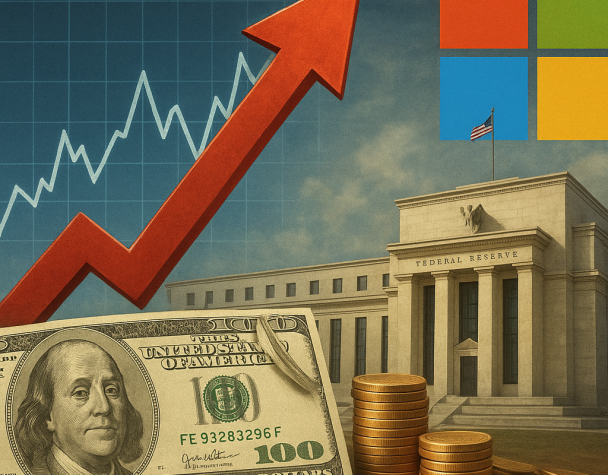
UBS Sees Two More Fed Rate Hikes as Microsoft’s $450B One‑Day Surge Sets Record
Fri, September 11, 2026UBS has revised its outlook for U.S. monetary policy, now anticipating two additional quarter‑point Federal Reserve rate hikes in 2026 following a stronger‑than‑expected U.S. jobs report. Meanwhile, Microsoft delivered a historic market‑value surge, adding nearly $450 billion in a single day after upbeat cloud and AI earnings guidance.
UBS Forecasts Two Fed Hikes After Strong Jobs Print
On September 7, UBS Global Wealth Management updated its interest rate outlook, projecting two 25‑basis‑point increases from the Federal Reserve in 2026—specifically in September and December. The shift follows a robust August jobs report, which showed 162,000 payrolls added and an unemployment rate holding steady at 4.1 percent. Previously, UBS had expected no policy change this year.
Following the report, markets increased their implied odds of a September hike to around 58 percent, up from 52 percent the prior day, based on CME’s FedWatch tool. UBS cited Fed Chair Kevin Warsh’s hawkish comments at the Jackson Hole symposium, ongoing inflation risks, and the resilient labor market as key drivers behind its revised call.
Microsoft’s Market‑Value Leap Sets Record
On July 30, Microsoft’s stock price surged more than 15 percent in a single trading session. That rally translated into nearly $450 billion in added market value—the largest one‑day gain ever recorded by a company. The surge followed strong cloud and AI growth forecasts that outpaced estimates and eased investor concerns over heavy capital expenditures, particularly for data center leases.
Analysts pointed to surging earnings momentum from Microsoft’s AI and cloud units as pivotal, with improved cash‑flow projections helping propel investor optimism. The company also revealed a capital expenditure forecast below analyst expectations, further bolstering sentiment.
What It Means for Investors
The UBS forecast of additional Fed hikes signals that monetary policy may remain tighter for longer, reinforcing the importance of monitoring duration exposure and interest‑rate sensitive sectors such as financials and housing. A resilient labor market complicates the Fed’s path to its 2 percent inflation target, suggesting the central bank could push back against dovish market expectations.
Meanwhile, Microsoft’s record market‑value gain underscores the growing impact of AI and cloud innovation as drivers of shareholder value. Its ability to combine growth momentum with disciplined capital spending may serve as a blueprint for other technology leaders. Investors seeking exposure to AI innovation and sustainable cash generation may look to Microsoft and similar hyperscalers for both return potential and defensive strength.
As the Fed’s September 15–16 meeting approaches, investors should stay tuned for inflation data and forward guidance. Microsoft’s performance also suggests that tech giants capable of delivering earnings surprises and capex discipline could continue to significantly influence broader market trajectories.