
Sun Pharma $11.75B Organon Buy; China Blocks Manus
Mon, April 27, 2026Introduction
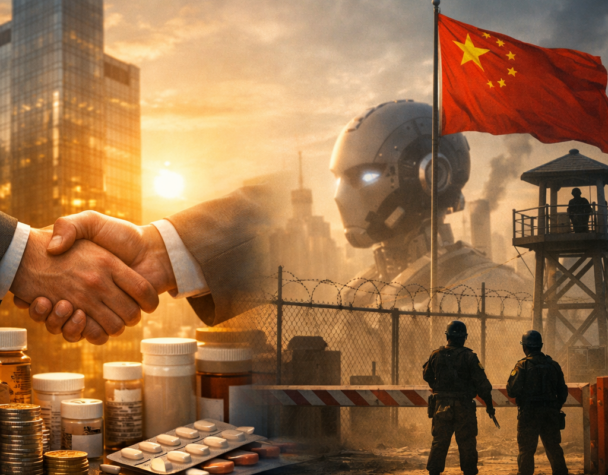
In the past 24 hours investors faced two concrete, consequential developments that demand attention. First, India’s Sun Pharmaceutical Industries announced an $11.75 billion acquisition of Organon, a deal that immediately reshuffles assets and balance-sheet priorities in specialty pharma. Second, Chinese authorities moved to block Meta’s roughly $2 billion purchase of AI startup Manus, underscoring growing geopolitical controls around advanced technology transfers. These are not speculative headlines—they are binding actions with direct implications for capital allocation, deal structuring, and regulatory due diligence.
Major Move: Sun Pharma’s Organon Purchase
Deal specifics and immediate market response
Sun Pharma agreed to acquire Organon in an all-cash transaction valued at about $11.75 billion, a price that reflected a meaningful premium to Organon’s prior trading levels. The acquisition expands Sun Pharma’s footprint in women’s health and biosimilars while bringing a set of mature brands and established revenues into its portfolio. Organon’s shares reacted sharply, climbing in early trading as investors digested the premium and strategic rationale.
Why this matters to investors
The deal is significant for three practical reasons. First, it accelerates consolidation in specialty segments of the pharmaceutical industry—areas where scale and distribution reach translate directly into margin expansion and pricing leverage. Second, it materially changes Sun Pharma’s leverage profile; financing a large, cash-driven purchase raises short- to medium-term debt ratios and places a premium on integration execution and cost synergies. Third, the transaction serves as a valuation benchmark: other specialty drugmakers and biosimilars players may be re-priced by reference to the multiples implied by this deal.
Key risk points to watch
- Integration risk: product overlaps, channel rationalization, and supply-chain harmonization will determine whether projected synergies are realized.
- Balance-sheet strain: higher debt increases sensitivity to interest-rate moves and could limit capital available for R&D or smaller tuck-in acquisitions.
- Regulatory and patent landscapes: any challenges to core Organon assets would have outsized effects on expected cash flows.
Minor but Meaningful: China Blocks Meta’s Manus Deal
What happened
Chinese regulators ordered Meta to unwind its acquisition of Manus, a Singapore-based AI startup with roots and personnel linked to China. The action, grounded in national security and technology-transfer concerns, effectively prevents the transfer of certain AI capabilities across borders and signals that geopolitical factors can trump commercial intent—even for deals executed outside mainland China.
Implications for AI M&A and cross-border investing
This development has outsized importance within the AI investment ecosystem. It sends a clear message: regulatory scrutiny of AI transactions—especially those involving firms with Chinese origins or dual-use capabilities—is rising. For firms pursuing cross-border consolidation in AI, the regulatory playbook now includes geopolitical approvals beyond standard antitrust reviews. For investors, the Manus outcome increases the premium on geopolitical due diligence: forecast models must incorporate the probability of government intervention that can nullify acquisition value practically overnight.
How These Events Change Investment Priorities
Portfolio and M&A strategy adjustments
Investors should recalibrate in two directions. In healthcare, successful large-scale acquisitions like Sun Pharma’s can create opportunities to ride consolidation tails—yet they also introduce exposure to integration and leverage cycles. In technology, particularly AI, cross-border plays deserve a higher risk discount; domestic consolidation or partnerships with clear regulatory pathways may now be preferable over high-profile cross-border buys.
Due diligence and scenario planning
Deal teams and allocators need to strengthen nonfinancial due diligence. That includes deeper analysis of regulatory pathways, country-of-origin issues for personnel and IP, and contingency plans if approvals are delayed or denied. Scenario planning should model both upside synergies and the value destruction that follows an abrupt regulatory reversal.
Conclusion
This pair of developments—one a large cash acquisition reshaping pharmaceutical holdings, the other a regulatory reversal that halts an AI deal—highlights two converging trends: industry consolidation reshapes sector economics, and geopolitics increasingly constrains technology transactions. For investors, the immediate takeaway is practical: adjust valuation assumptions to reflect integration and leverage risks in healthcare deals, and raise the bar for geopolitical and regulatory risk analysis in AI and other sensitive technologies. These are real, actionable changes to the investment environment that will influence portfolio construction and deal execution going forward.