
Oil Volatility Hits Stocks; IBKR Adds Korea Access
Fri, May 08, 2026Oil Volatility Hits Stocks; IBKR Adds Korea Access
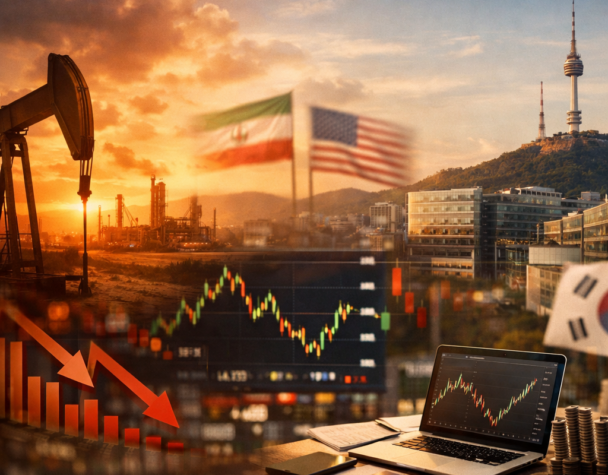
Geopolitical developments and platform-level market expansion combined to shape investor behavior over the past 24 hours. Renewed uncertainty around U.S.–Iran negotiations produced pronounced oil-price swings and modest losses across major U.S. indices, while Interactive Brokers (IBKR) announced direct client access to the Korea Exchange (KRX)—a move that widens opportunities for investors seeking Asian equity exposure.
What happened: the headlines and immediate data
Negotiations between the United States and Iran remained unresolved, keeping oil price swings elevated. Intraday volatility pushed crude futures sharply in both directions before prices ultimately settled lower for the session. The risk-off knee-jerk reaction translated into modest equity weakness: the S&P 500 fell roughly 0.4%, the Dow dropped about 0.6%, and the Nasdaq eased near 0.1% from recent highs. Futures trading later showed mild gains, reflecting cautious optimism but continued investor wariness.
Meanwhile, Interactive Brokers announced on May 7, 2026, that it is enabling U.S. clients to trade equities directly on the Korea Exchange. The KRX represents a large and liquid market—estimated at around $4 trillion in market capitalization—home to major semiconductor, automotive and conglomerate names. IBKR’s move removes a structural barrier for retail and institutional investors seeking direct Korean listings without complex foreign account arrangements.
Why the oil swings matter for investors
Geopolitics often acts like a sudden gust of wind on a sailboat: it can change direction and speed quickly, forcing immediate course corrections. Oil is an especially sensitive barometer because supply shocks or perceived supply risks feed into inflation expectations, input costs for businesses, and central bank policy outlooks.
Transmission channels
- Energy sector sensitivity: Oil producers and integrated energy firms typically see higher trading volumes and price dispersion during such episodes.
- Inflation and rates: A sustained rise in oil can lift headline inflation and influence bond yields, pressuring rate-sensitive sectors such as utilities and consumer discretionary.
- Supply-chain costs: Industries reliant on transportation and petrochemical inputs can face margin compression if volatility persists.
For investors, the crucial distinction is whether current volatility reflects a temporary diplomatic flare-up or signals a longer-term supply disruption. Short-lived turbulence calls for tactical hedging and volatility management; a more entrenched supply shock requires a strategic reweighting toward commodities, inflation-protected assets, and energy equities.
Why IBKR’s Korea access matters to portfolio construction
IBKR’s expansion into KRX trading lowers frictions for investors targeting South Korea—one of Asia’s most export-oriented and technology-heavy economies. For investors seeking sectoral exposure to semiconductors, EV supply chains, or global conglomerates, direct access improves execution, market hours alignment, and potential cost efficiencies.
Niche benefits and practical implications
- Diversification: Korea offers exposure to companies and sectors underrepresented in U.S. indices—particularly semiconductors (Samsung, SK Hynix), automotive OEMs and suppliers, and major industrial groups.
- Execution and costs: Trading directly on KRX can reduce intermediary costs and simplify tax/reporting mechanics compared with ADRs or cross-listed instruments.
- Currency and settlement considerations: Investors should manage KRW exposure and understand differing settlement cycles and corporate governance norms.
Actionable takeaways for investors
Short-term (tactical):
- Consider hedges for oil exposure—options or short-duration energy ETFs—if portfolios have concentrated bets in transportation or commodity-sensitive sectors.
- Trim positions in cyclical names if volatility begins to impact inflation expectations and rates.
Medium- to long-term (strategic):
- Use IBKR’s KRX access to evaluate direct positions in Korean leaders of semiconductors and EV supply chains as part of a global equity sleeve.
- Assess allocations to inflation-linked bonds or commodity equities if geopolitical risk elevates the probability of sustained oil-price pressure.
- Monitor central bank commentary closely—if oil-driven inflation expectations change, policy shifts will follow and influence equity and fixed-income returns.
Conclusion
The past 24 hours underscore a dual reality for investors: macro-level geopolitical events can quickly reshape risk premia and sector performance, while platform-level developments can quietly expand investment choices. Oil-price swings driven by U.S.–Iran diplomatic uncertainty remain a near-term risk that can increase volatility across energy, inflation-sensitive sectors, and bond markets. At the same time, Interactive Brokers’ Korea Exchange access creates a tangible, structural opportunity for investors to diversify toward Asia’s semiconductor and industrial leaders without the historical frictions of foreign-market entry. Investors should combine tactical risk management with strategic evaluation of new access points to maintain resilience and capture selective opportunities.
Data points referenced reflect market moves and announcements reported within the last 24 hours.