
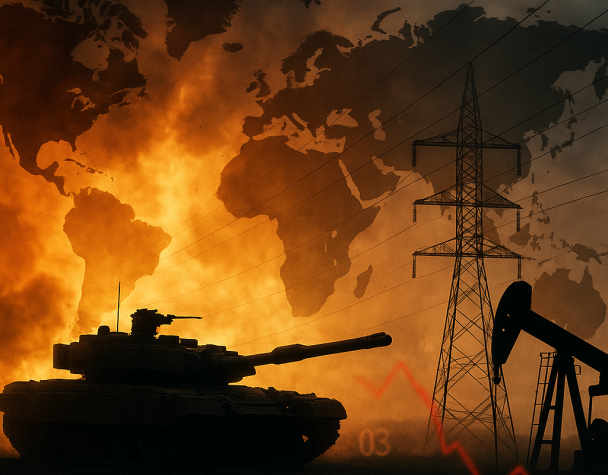
Geopolitical Tensions Escalate, Impacting Global Markets and Energy Prices
Fri, July 10, 2026Geopolitical Tensions Escalate, Impacting Global Markets and Energy Prices
On July 8, 2026, U.S. President Donald Trump declared the interim deal with Iran “over,” signaling a significant escalation in geopolitical tensions. This announcement led to immediate reactions across global financial markets, with notable declines in major stock indices and a surge in oil prices.
Market Reactions to U.S.-Iran Tensions
Following President Trump’s statement, the S&P 500 closed lower, reflecting investor concerns over potential disruptions in global trade and energy supplies. The Dow Jones Industrial Average also experienced a significant drop, while the Nasdaq Composite showed a slight uptick, driven by gains in the semiconductor sector. According to Reuters, the S&P 500 ended down after Trump’s announcement, highlighting the market’s sensitivity to geopolitical developments.
Oil Prices Surge Amid Escalating Conflict
The heightened tensions between the U.S. and Iran led to a sharp increase in oil prices. Brent crude reached $78 per barrel, as reported by KuCoin, driven by fears of supply disruptions in the Middle East. This surge in energy prices has broader implications for global inflation and economic stability.
Semiconductor Sector Shows Resilience
Despite the overall market downturn, the semiconductor sector demonstrated resilience. The Philadelphia Semiconductor Index rose by 2.23%, supported by a record $54 billion in inflows. This trend suggests that investors remain optimistic about the long-term growth prospects of the semiconductor industry, particularly in the context of artificial intelligence advancements. KuCoin noted that the sector’s performance reflects institutional investors’ confidence in the easing of geopolitical tensions and the sustained growth thesis for AI.
Conclusion
The recent escalation in U.S.-Iran tensions has introduced increased volatility in global financial markets, affecting stock indices and commodity prices. While the energy sector faces upward pressure on prices, certain industries like semiconductors continue to attract investor interest. Market participants should remain vigilant, as ongoing geopolitical developments are likely to influence investment strategies and economic forecasts in the near future.