
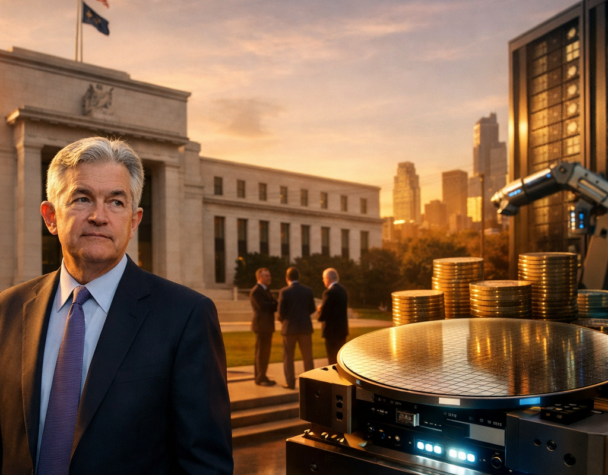
Fed Holds Rates; Powell Remains — Qualcomm $20B Q1
Thu, April 30, 2026Overview
On April 29, 2026, the Federal Reserve opted to keep the federal funds rate at 3.50%–3.75% in what was Jerome Powell’s final meeting as chair. The vote included four dissents, the most internal disagreement since 1992, and Powell confirmed he will remain on the Federal Reserve Board after relinquishing the chair. In a separate corporate development, Qualcomm reported an earnings beat and announced a $20 billion share buyback, emphasizing its role in AI and data-center infrastructure.
Fed Decision: Details and Immediate Effects
Key facts from the FOMC
- Policy rate held at 3.50%–3.75%.
- Four dissenting votes, a notable rise in internal disagreement.
- Powell will step down as chair but remain on the Board of Governors.
- Statement signaling continued vigilance on inflation and reaction to geopolitical risks.
Market reaction snapshot
Markets reacted quickly: Treasury yields initially drifted lower but then rose as investors parsed the hawkish undertone implied by the dissent. Equities paused after gains as participants awaited corporate earnings and further clarity from Fed-speak. The rate hold reduces immediate odds of a rate hike, but the sharp internal split introduces uncertainty about the path for policy later in the year.
Why the Fed’s Vote Matters for Investors
Policy signal vs. policy action
A rate hold is a snapshot, not a roadmap. The combination of a hold plus several dissents is like a captain keeping course while some officers push for a change of direction—markets must weigh both the present decision and the underlying disagreement. That dissent indicates that some policymakers see upside inflation or labor conditions that could justify tighter policy if conditions change.
Practical implications
- Bonds: Increased volatility in yields; consider duration tuning—shorter duration cushions immediate rate shifts, longer duration benefits if rates later decline.
- Equities: Tech and growth stocks remain sensitive to yield moves; value and cyclical sectors may rerate if rates trend higher.
- Dollar and EM: A Fed that leans hawkish supports the dollar and can pressure emerging-market assets dependent on USD funding.
Qualcomm’s $20B Buyback: Niche Impact in Semiconductors and AI
What Qualcomm announced
Qualcomm beat expectations on recent results and unveiled a $20 billion repurchase program. The move returns cash to shareholders, tightens outstanding share count, and signals management confidence in cash generation from core businesses—particularly chips for 5G, AI acceleration, and data-center connectivity.
Why this matters for the AI-infrastructure niche
Buybacks at large semiconductor companies often reflect durable free cash flow and confidence in secular demand. In Qualcomm’s case, the program strengthens the investment thesis that chipmakers aligned to cloud and AI infrastructure can monetize growth even amid macro uncertainty. For niche investors, this is a reminder to differentiate between firms with durable cash flow vs. those dependent on cyclical inventory restocking.
Actionable Takeaways
- Reassess fixed-income duration: With yield volatility likely, review how duration aligns with your income target and risk tolerance.
- Watch earnings over the next weeks: Fed rhetoric can amplify earnings reactions—prioritize companies with strong cash flow and pricing power.
- For semiconductor exposure: Favor firms with clear end-market leverage to AI/data centers and healthy balance sheets that can support buybacks or capex.
- Factor geopolitics into allocation sizing: Heightened geopolitical risks can affect energy prices, supply chains, and safe-haven flows—position sizing matters.
Conclusion
The Fed’s decision to hold rates while recording an unusually high number of dissents introduces a nuanced policy signal: stability now, but disagreement about the path ahead. Powell remaining on the Board offers continuity in experience even as leadership changes. At the corporate level, Qualcomm’s $20 billion buyback underscores pockets of confidence—particularly in AI and data-center demand—within technology. Investors should balance near-term volatility resulting from policy debate and geopolitical tension with selective exposure to companies demonstrating resilient cash generation and structural growth drivers.
Note: This article summarizes recent developments and is not investment advice. Readers should consult a licensed financial professional before making investment decisions.