
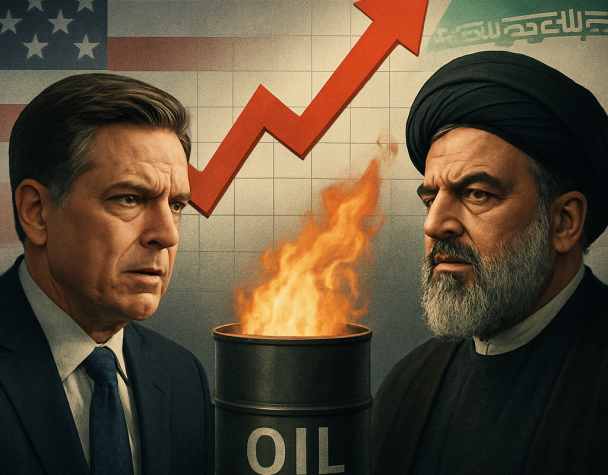
Escalating U.S.-Iran Tensions Trigger Market Volatility and Oil Price Surge
Thu, July 09, 2026Escalating U.S.-Iran Tensions Trigger Market Volatility and Oil Price Surge
On July 8, 2026, global financial markets experienced significant turbulence following President Donald Trump’s announcement that the ceasefire with Iran is “over.” This development led to a sharp decline in stock indices and a substantial increase in oil prices.
Market Reactions to Renewed Geopolitical Tensions
The Dow Jones Industrial Average (DJIA) plummeted to approximately 52,100 points, marking a 1.5% decrease. Similarly, the S&P 500 and Nasdaq Composite indices also registered declines. This downturn was primarily driven by investor concerns over escalating tensions in the Middle East and the potential economic repercussions. According to Reuters, the DJIA was down 514 points at 10:10 a.m. ET, with other reports indicating losses nearing 800 points before noon.
The energy sector was notably impacted, with Brent crude oil prices surging over 5%, reaching an intraday high of $78 per barrel. This spike was attributed to fears that renewed hostilities could disrupt oil supplies through the Strait of Hormuz, a critical chokepoint for global oil shipments. CBS News reported that Brent crude rose 6.3% to $78.80 a barrel, while West Texas Intermediate climbed 6.4% to $75.
Federal Reserve’s Hawkish Stance Adds to Market Uncertainty
Compounding the market’s unease, the Federal Reserve released meeting minutes indicating a more hawkish policy stance. Officials expressed heightened concerns about persistent inflation risks and signaled a cautious approach to future rate decisions. This shift suggests that interest rates may remain elevated for a longer period, further influencing investor sentiment. As reported by FX Leaders, the Fed has removed its easing bias, indicating a cautious approach to future rate decisions amid rising inflation forecasts.
Implications for Investors
The confluence of geopolitical tensions and monetary policy shifts has created a challenging environment for investors. The surge in oil prices may benefit energy stocks in the short term; however, prolonged conflicts could lead to broader economic disruptions. Additionally, the prospect of sustained higher interest rates may impact borrowing costs and corporate earnings, influencing investment strategies across various sectors.
Conclusion
The recent escalation in U.S.-Iran tensions, coupled with the Federal Reserve’s hawkish outlook, has introduced significant volatility into global markets. Investors are advised to closely monitor geopolitical developments and central bank communications to navigate this complex landscape effectively.