
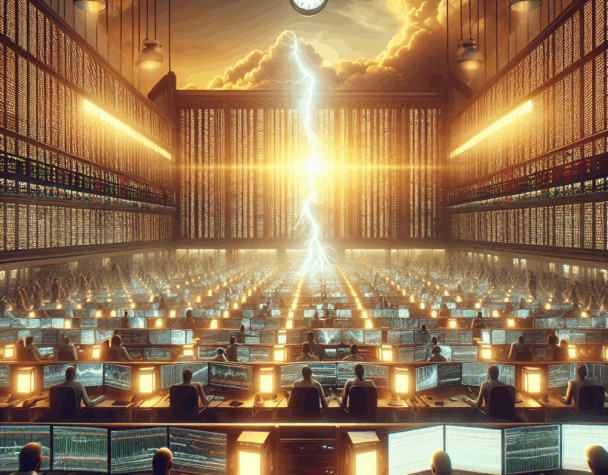
CME Outage Reveals Clearing Risk; Cboe Adds Hours!
Wed, December 03, 2025Introduction
Two developments in the past 24 hours highlight contrasting pressures on modern trading: a prolonged outage at the CME Group that interrupted derivatives trading and raised systemic resilience questions, and a targeted expansion by Cboe to offer near-24-hour trading for Russell 2000 options. The first story exposes infrastructural fragility that can ripple through portfolios and clearing systems; the second shows continued product innovation aimed at extended access and liquidity for small‑cap derivatives.
CME Outage: What Happened and Why It Matters
During the post‑holiday trading window, CME Group experienced an extended outage tied to a data‑center cooling failure at a supplier facility near Chicago. Trading and clearing services were disrupted for nearly 10 hours, affecting futures and options across equities, fixed income, FX and commodities. Although the event occurred on a relatively quiet day, its duration and breadth brought renewed attention to single points of failure in core market infrastructure.
Systemic implications
Exchanges and clearinghouses operate as the financial system’s backbone; when that backbone strains, price discovery, risk management, and settlement processes can all be delayed. The outage highlighted several issues:
- Concentration risk: heavy dependence on a few data centers and third‑party providers increases systemic exposure.
- Operational continuity: disaster recovery plans may not sufficiently account for prolonged physical‑layer failures.
- Liquidity and hedging disruption: even short stoppages can force urgent reallocation or leave positions unmanaged, widening bid‑ask spreads when trading resumes.
Think of the exchange as a central nervous system: if a major nerve pathway is interrupted, signals are delayed or misrouted, and the organism compensates in ways that can be costly or harmful. The CME incident shows that technological resilience is now as critical as capital resilience for institutions and regulators alike.
Operational and regulatory fallout
Immediate responses typically include incident reviews, audits of third‑party dependencies, and pressure on operators to improve redundancy and communication protocols. Market participants should expect sharper scrutiny from regulators on contingency planning, vendor oversight, and incident reporting standards. Clearing firms and major trading houses are likely to revisit business‑continuity plans and consider geographically diverse connectivity and backup clearing arrangements.
Cboe Extends Russell 2000 Options Trading Hours
In contrast to an infrastructure failure, Cboe’s announcement to offer nearly round‑the‑clock trading for Russell 2000 options is a deliberate product enhancement. Extending hours aims to accommodate international participants, provide more continuous hedging opportunities, and narrow timing mismatches between different time zones for small‑cap exposure.
Who benefits and how
- International investors and arbitrageurs gain better alignment with U.S. small‑cap price moves outside regular U.S. hours.
- Portfolio managers holding Russell 2000 exposure can hedge or adjust positions more responsively to news that occurs when U.S. markets are closed.
- Options market makers and liquidity providers can potentially capture spreads across a longer trading window, though they must manage staffing and risk around extended sessions.
This change is incremental but meaningful for the small‑cap derivatives niche: extended hours reduce temporal hedging gaps and can gradually build deeper liquidity if adoption grows.
What Investors and Firms Should Do Now
Both stories point to practical next steps for different actors in the investment ecosystem:
- Asset managers and traders: review counterparty and exchange contingency plans, diversify routing and clearing partners where feasible, and test operational continuity under extended scenarios.
- Clearinghouses and exchanges: accelerate redundancy projects, publish clearer incident escalation playbooks, and strengthen vendor resilience requirements.
- Options traders and small‑cap specialists: evaluate how extended Russell 2000 options hours fit into hedging strategies, and monitor early liquidity and spreads during the new sessions.
- Regulators: consider targeted guidance on third‑party concentration, reporting standards for outages, and minimum recovery objectives for critical infrastructure.
Conclusion
The CME outage and Cboe’s trading‑hours expansion illustrate two sides of a modern trading ecosystem: the imperative for robust infrastructure that prevents disruptive outages, and the commercial push to broaden access and liquidity in specialized trading venues. Together they reinforce a central lesson for investors and operators—innovation must be paired with resilience. Firms that prioritize both will be better positioned to manage risk and capture opportunities as the trading environment evolves.