
Ceasefire Hopes Lift Stocks; Oil Stress Weighs Now
Fri, April 17, 2026Ceasefire Hopes Lift Stocks; Oil Stress Weighs Now
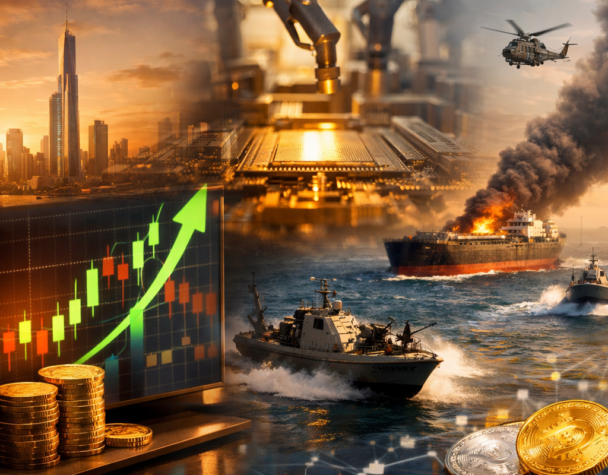
Global risk assets climbed as investors reacted to renewed diplomatic momentum that could calm a major geopolitical flashpoint, while corporate earnings underscored robust demand for AI semiconductors. Those lifts, however, sit against a backdrop of sharply elevated oil prices caused by supply disruptions in the Strait of Hormuz — a reminder that gains can be fragile when energy flows are threatened. At the same time, a niche but meaningful product launch in Europe shows institutional channels into tokenisation and stablecoin infrastructure are advancing.
Major move: diplomacy, AI demand and energy risk
Geopolitical thaw fuels optimism
Reports of progress toward a ceasefire between the U.S. and Iran sparked a wave of risk-on positioning across equity indexes. Investors interpreted the diplomatic signal as a reduction in acute tail-risk, prompting renewed buying in cyclical and growth names. That sentiment was amplified by corporate results that directly tie into the AI cycle.
TSMC’s surge highlights AI-driven earnings momentum
Taiwan Semiconductor Manufacturing Company posted a striking first-quarter performance, with net profit jumping materially year-over-year as demand for AI-focused chips accelerated. TSMC’s results serve as a concrete data point that AI-capacity investment continues to underpin technology-sector revenues and margins — a key fundamental story supporting broader equity rallies.
Energy supply disruption tempers the upside
At the same time, the Strait of Hormuz remained effectively choked, sending Brent crude above the low triple digits. Elevated oil prices reverberate through the economy by increasing transportation and production costs, which can feed into inflation and influence central-bank policy. Prominent market voices have warned that a prolonged blockage of a major shipping lane could substantially impair global growth, turning a short-term rally into a longer-term policy concern.
Macro implications: stronger growth signals vs. sticky inflation risks
The current configuration — stronger earnings in AI-related sectors combined with higher energy prices — creates a classic policy dilemma. On one hand, robust corporate profits and easing geopolitical tensions support equity valuations and could lift risk appetite. On the other, surging energy costs increase the odds that inflation stays above central-bank targets for longer, which tends to keep interest rates elevated and compress equity multiples.
- Short-term: investor sentiment improved as geopolitical risk eased and tech earnings beat expectations.
- Medium-term: sustained high energy prices could stall consumer spending and keep policy rates higher for longer.
- Policy watch: central-bank guidance will be decisive—markets will reprice quickly if rates are signaled to stay restrictive.
Minor but notable: Europe’s TKNX ETF opens tokenisation access
What was launched
Global X launched TKNX, a UCITS ETF listed initially on London and Xetra exchanges, offering European investors exposure to tokenisation and stablecoin-related businesses. The fund tracks an index focused on firms involved in digital asset infrastructure and carries a competitive expense ratio aimed at mainstream investors.
Why the niche matters
While this ETF will not move broad asset prices, it signals a maturation of investment products for digital-asset infrastructure. For institutional and wealth-management channels, a UCITS vehicle makes it easier to allocate to a theme that previously required bespoke access or direct digital-asset holdings. As regulatory clarity improves in Europe, expect more packaged products that bring tokenisation and stablecoins into model portfolios.
Practical takeaways for investors
Positioning decisions should balance the dual forces at work: constructive demand signals from corporate earnings and the concrete risk that elevated energy prices imply for inflation and policy. For diversified portfolios, consider the following actions:
- Trim exposure to highly rate-sensitive growth names if energy-driven inflation expectations rise meaningfully.
- Use earnings strength in AI supply chains (semiconductors, equipment suppliers) as an active overweight idea, while monitoring margin trajectories.
- For investors seeking thematic exposure to digital finance, the new TKNX ETF offers a regulated route into tokenisation and stablecoin infrastructure — appropriate for a satellite allocation rather than core holdings.
Conclusion
The current market narrative is a study in contrasts: diplomatic progress and AI-driven corporate strength have rekindled risk appetite, yet a severe disruption to oil flows introduces a substantial inflation and growth risk. That duality requires disciplined allocation choices — capturing secular growth themes while hedging for persistent energy and policy uncertainty. Meanwhile, the introduction of regulated tokenisation products in Europe underscores how investment innovation continues to broaden the toolkit available to investors navigating these competing forces.