
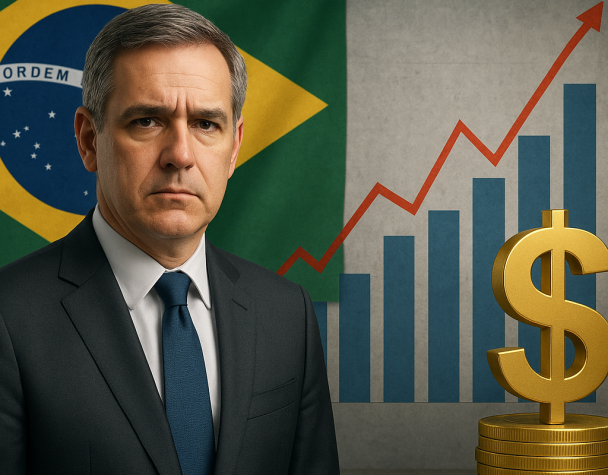
Brazil’s Central Bank Projects Inflation Near Target, Reinforcing Expectations of Additional Rate Cuts as Mubadala Tops Sovereign Wealth Fund Activity
Fri, September 25, 2026The Central Bank of Brazil has taken a dovish turn, projecting that inflation will hover near its 3% target at the policy horizon relevant to the November interest‑rate decision—an outlook that is reinforcing market expectations for further rate cuts this year. Meanwhile, the UAE’s Mubadala has emerged as the most active sovereign wealth investor of the first half of 2026, with $15.2 billion deployed despite global volatility.
Brazil’s Inflation Outlook Clears Path for Further Rate Easing
In its latest quarterly monetary policy report, released on September 24, the Central Bank of Brazil forecast annual inflation at just 3.1% in the second quarter of 2028, the horizon that will inform its upcoming November meeting. This projection aligns closely with the sovereign’s 3% target and signals meaningful easing in the central bank’s inflation outlook. At the same time, the bank trimmed its GDP growth projection for 2026 to 1.8% (down from 2.0%), and for 2027, it provided a fresh forecast of 1.4% growth.
Investors widely interpret these projections as justification for another Selic rate cut before year‑end, following last week’s decision by the Copom to lower the benchmark by 25 basis points to 13.75%—marking the fifth straight reduction.
This dovish messaging indicates that policymakers believe the level of monetary policy restriction is sufficient or nearing sufficiency. The downward revision to growth forecasts further diminishes the risk of a sudden pivot back to tightening. Taken together, these signals reinforce expectations that the next move by the central bank is likely to be another cut, contingent on incoming data and election‑year dynamics.
Mubadala Leads Global Sovereign Wealth Fund Investment Wave
This diverging development in capital flows runs parallel to a striking surge in sovereign wealth fund activity. UAE’s Mubadala Holdings led the charge, deploying $15.2 billion in the first half of 2026—making it the most active player globally during that period despite heightened geopolitical and economic volatility linked to the US‑Iran conflict.
According to Global SWF data, GCC sovereign funds jointly committed $53.9 billion across 108 transactions in H1. Mubadala’s activity featured prominently alongside landmark plays such as the $6 billion sale of Shanghai Moonton Technology (ByteDance’s gaming unit) to Saudi Arabia’s Savvy Games Group, and a major co‑investment by Qatar Investment Authority and CalPERS alongside GIP and EQT to take energy group AES private. Overall, sovereign entities deployed $143.6 billion across 366 deals, contributing to total assets under management reaching $62.5 trillion globally.
What These Movements Mean for Investors
The Brazilian central bank’s updated inflation forecast plays directly into the hands of fixed‑income and rate‑sensitive investors: with rates expected to head lower, bond yields may trend downward, boosting the appeal of shorter‑duration and investment‑grade instruments. Emerging market peers may be scrutinizing Brazil’s playbook as a signal of regional monetary easing trajectories.
On the sovereign capital front, Mubadala’s deployment momentum underscores the strategic pivot of Gulf wealth funds toward active and varied global holdings, from tech and gaming to energy and infrastructure. Such sustained capital inflows could translate into equity and deal opportunities for investors tracking sovereign-backed assets or co‑investment structures.
Looking ahead, markets will closely monitor Brazil’s inflation data and macroeconomic indicators for signs that pave the way for another Selic reduction. Simultaneously, sovereign funds—looking to capitalize on lower valuations and structural growth sectors—are likely to remain key sources of continuity and capital amid evolving market conditions.