
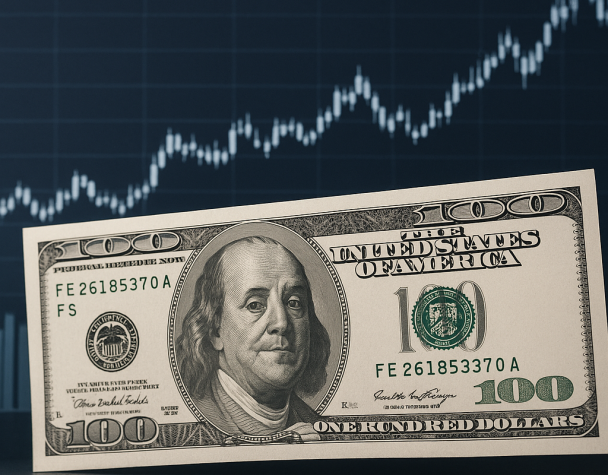
Dollar Index Holds Steady Over Past Week as Safe‑Haven Flows Offset Fading Rate Hike Bets
Wed, October 14, 2026The U.S. dollar index—which tracks the greenback against a basket of six major currencies—ended the past week largely unchanged, even as it hit a one‑month low earlier in the trading period due to softer inflation data. While prospects for near‑term Federal Reserve rate hikes weakened, renewed safe‑haven demand amid tensions in the Middle East helped support the currency.
On Friday, the dollar index stood at approximately 100.76, reflecting a 0.2% weekly decline, after falling to a one‑month trough mid‑week on easing expectations for imminent rate increases by the Federal Reserve. Concurrently, geopolitical developments—including alertness over renewed U.S.–Iran clashes—spurred investors toward safe‑haven assets, providing a buffer for the dollar. Traders responded by trimming July rate‑hike bets, with CME FedWatch probabilities for a July hike sliding to around 14% from roughly 25% just a week earlier.
Cross‑Currency Movements Reflect Mixed Themes
Against major peers, the dollar’s movements were nuanced. The euro rose modestly by 0.2% over the week to trade near $1.1436, while sterling fell around 0.2% to about $1.3455, though it logged a third consecutive week of gains, underpinned by optimism around political stability in the U.K. Emerging-market and commodity-related currencies like the Australian dollar were softer, though gains were seen earlier in the week.
The Japanese yen remained vulnerable, trading at roughly ¥162.44 per dollar—near its 40‑year low of ¥162.84. The prospect of Japanese intervention lingered, as Finance Minister Satsuki Katayama reiterated readiness for decisive action if the yen’s weakness intensified further.
What It Means
The dollar’s stability despite de-escalating Fed policy expectations underscores the balancing act between macroeconomic data and geopolitical risk dynamics. While cooling inflation suggests the Fed may delay tightening, geopolitical uncertainty has preserved demand for U.S. assets. The yen’s vulnerability continues to highlight Japan’s exposure to energy‑related shocks and the delicate credibility of intervention threats.
Looking ahead, markets will closely monitor upcoming U.S. data—especially labor and inflation indicators—as well as developments from Federal Reserve communications. Meanwhile, renewed geopolitical tensions could reignite safe‑haven flows, keeping the dollar range‑bound but supported.