
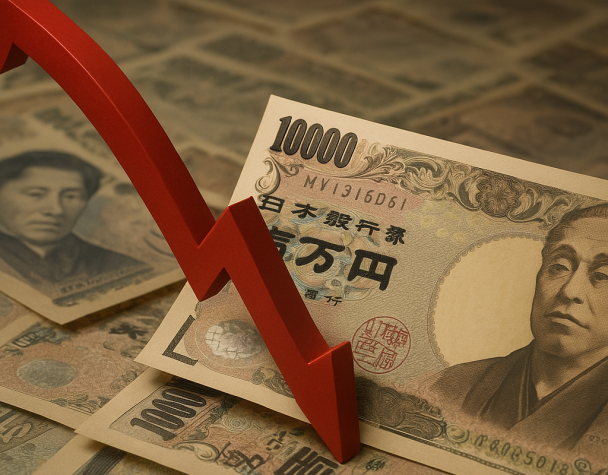
Japanese Yen Declines to 40-Year Low Amidst Market Speculation on Intervention
Tue, July 28, 2026Japanese Yen Declines to 40-Year Low Amidst Market Speculation on Intervention
As of July 28, 2026, the Japanese yen has depreciated to a 40-year low, with the USD/JPY exchange rate reaching 163.712. This significant decline has intensified discussions about potential government intervention to stabilize the currency.
Historical Context and Recent Trends
The yen’s depreciation has been a persistent trend over recent years. In May 2026, the Japanese government and the Bank of Japan (BOJ) conducted a large-scale currency intervention, deploying approximately 11 trillion yen to counteract the currency’s weakening. This intervention temporarily strengthened the yen from over 160 to around 155 per dollar. However, the effects were short-lived, and the yen has since continued its downward trajectory.
Factors Contributing to the Yen’s Decline
Several factors have contributed to the yen’s sustained depreciation:
- Interest Rate Differentials: The BOJ’s decision to maintain low interest rates contrasts with the U.S. Federal Reserve’s tighter monetary policies, making the yen less attractive to investors seeking higher returns.
- Trade Imbalances: Japan’s trade data indicates a significant deficit, with imports rising faster than exports. In June 2026, exports increased by 19.3% year-on-year, while imports surged by 25.4%, leading to a 406.9 billion yen deficit. The weak yen has inflated import costs, particularly for energy and raw materials.
- Market Sentiment: Investors’ perceptions of Japan’s economic outlook and policy responses have influenced currency movements. The yen’s decline reflects concerns about the effectiveness of past interventions and the BOJ’s commitment to stabilizing the currency.
Potential for Further Intervention
The yen’s current level has reignited speculation about possible government intervention. Historically, Japanese authorities have intervened in the currency market to prevent excessive volatility. However, the effectiveness of such measures is debated. While interventions can provide temporary relief, they may not address underlying economic factors driving the yen’s depreciation.
Implications for the Japanese Economy
A weaker yen has mixed implications for Japan’s economy:
- Export Competitiveness: A depreciated yen makes Japanese goods more affordable in international markets, potentially boosting exports.
- Import Costs: Conversely, the cost of imported goods, especially energy and food, rises, leading to higher consumer prices and potential inflationary pressures.
- Tourism: A weaker yen can attract foreign tourists seeking more affordable travel options, benefiting the tourism sector.
Conclusion
The Japanese yen’s decline to a 40-year low underscores the complex interplay of monetary policy, trade dynamics, and market sentiment. While intervention remains a tool for authorities, its long-term effectiveness is uncertain. Stakeholders will closely monitor developments, balancing the benefits of a weaker yen against the challenges it poses to the broader economy.