
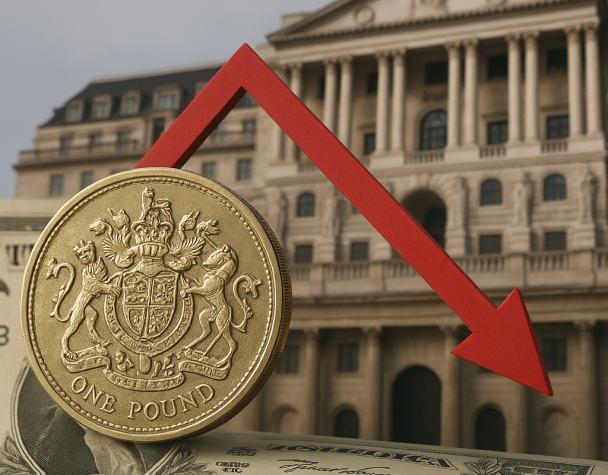
Bank of England Holds Rate at 3.75%, Pound Weakens Against Dollar as Minutes Signal Growing Inflation Pressure
Tue, September 22, 2026The Bank of England held its Bank Rate steady at 3.75% at its meeting ending on 16 September 2026. The Monetary Policy Committee voted 6–3 in favour of holding rates, while three members preferred a 25 basis‑point hike, citing mounting inflation risks stemming from surging energy prices and geopolitical uncertainty. The decision triggered a modest decline in sterling, particularly against the dollar, as the tone of the accompanying minutes heightened market concerns about upward inflation pressures.
According to the Bank’s published summary, elevated and volatile energy prices—driven by the ongoing conflict in the Middle East—remain the dominant source of uncertainty for the UK inflation outlook. The Committee acknowledged that higher energy costs are likely to push CPI inflation above the current rate of 3.1%, with projections indicating a rise to around 3.75% in Q4 2026 and above 4% in early 2027.
In response, the BoE emphasized its readiness to act further if needed, stating that “the longer this volatility persists, the bigger the impact it will have on inflation, and the more likely it is we will need to raise Bank Rate to ensure inflation falls back to our 2% target.” This cautious stance, combined with the hawkish concerns in the minutes, weighed on sterling.
GBP/USD Moves Amid Data and Policy Signals
Investing.com reported that GBP/USD dropped approximately 0.23% to around 1.3350 following the rate decision and minutes’ release, underscoring market sensitivity to the BoE’s inflation outlook and policy direction.
Earlier in the week, sterling had already been under pressure from disappointing UK jobs data. The currency fell to about 1.3470 against the dollar—down 0.23%—after private sector payrolls declined by 34,000 in August. This contraction, along with wage growth holding near a subdued 2.9%, reinforced expectations that the BoE would hold rates rather than shift hawkishly absent further shocks to energy costs.
Context: Quiet Week Ahead but Elevated Risks Persist
Traders entered the week cautiously as GBP/USD exhibited unusually low volatility. However, the sequence of key data releases—UK jobs, CPI, and the BoE decision—created potential for abrupt moves. The subdued nature of recent pound fluctuations reflects both low realised volatility and the highly correlated moves with broader euro/dollar trends.
Adding to sterling’s vulnerability are pressures in UK bond markets. Investment commentary highlighted increasing gilt yields—10‑year yields breached 5.25%, marking 19‑year highs, while 30‑year yields hit levels not seen since 1997—contributing to a fiscal risk premium that further dampened sterling demand.
Significance and What to Watch
The BoE’s decision to maintain rates underscores its balancing act: energy-driven inflation risks warrant vigilance, yet soft domestic demand and wage dynamics limit immediate tightening. Markets’ response—sterling weakening amid cautious minutes—signals heightened sensitivity to how energy shocks may evolve and whether they further seep into broader inflation via wage or price-setting.
Looking ahead, sterling’s path will likely hinge on two key developments: the evolution of global energy prices amid geopolitical tensions, and upcoming UK inflation data. If energy remains elevated or CPI surprises to the upside, pressure on sterling could deepen. Conversely, if UK inflation shows signs of easing or wage growth remains contained, markets may regain confidence in the BoE’s hold stance.