
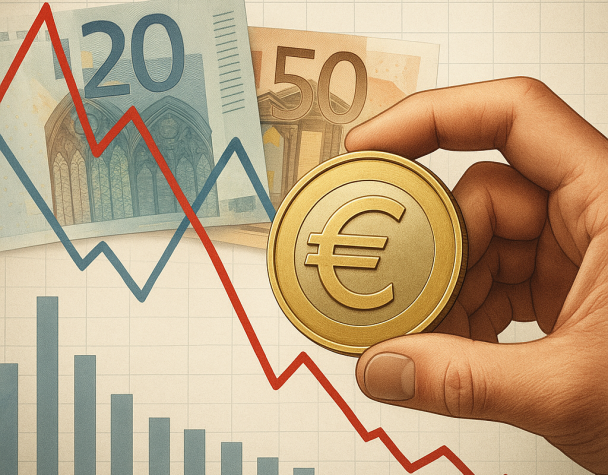
Euro Exchange Rate Fluctuations Amid Recent Economic Developments
Sun, July 12, 2026Euro Exchange Rate Fluctuations Amid Recent Economic Developments
In the past week, the euro (EUR) has experienced notable fluctuations against the US dollar (USD), reflecting a complex interplay of economic indicators and market sentiments. As of July 12, 2026, the EUR/USD exchange rate stands at 1.1408, indicating a slight depreciation of the euro compared to earlier in the week.
Recent Exchange Rate Movements
Over the last seven days, the EUR/USD pair has exhibited a downward trend. On July 10, 2026, the exchange rate was recorded at 1.143, with a day’s range between 1.1411 and 1.1461. This represents a 0.14% decrease from the previous close, highlighting the euro’s gradual weakening against the dollar.
Factors Influencing the Euro’s Performance
Several key factors have contributed to the euro’s recent depreciation:
1. Divergent Monetary Policies
The European Central Bank (ECB) has maintained a dovish stance, keeping interest rates low to stimulate economic growth within the Eurozone. In contrast, the Federal Reserve has signaled potential rate hikes in response to rising inflation in the United States. This divergence in monetary policies has made the USD more attractive to investors seeking higher yields, thereby exerting downward pressure on the EUR/USD exchange rate.
2. Economic Data Releases
Recent economic data from the Eurozone has been mixed. While some indicators suggest a gradual recovery, others point to persistent challenges. For instance, industrial production figures released earlier this week showed a modest increase, but consumer confidence indices have remained subdued. These mixed signals have contributed to market uncertainty, affecting the euro’s valuation.
3. Geopolitical Tensions
Ongoing geopolitical tensions, particularly concerning trade relations between the European Union and other major economies, have also played a role. Uncertainties surrounding trade agreements and potential tariffs have led to cautious investor behavior, impacting the demand for the euro.
Historical Context
Historically, the EUR/USD exchange rate has experienced significant fluctuations. Since its introduction in 1999, the euro has traded between lows of approximately 0.82 USD and highs of around 1.60 USD. These movements have been influenced by various factors, including economic crises, policy decisions, and global market dynamics.
Implications for Stakeholders
The recent depreciation of the euro has several implications:
- Exporters: A weaker euro can benefit Eurozone exporters by making their goods and services more competitively priced in international markets.
- Importers: Conversely, importers may face higher costs for goods and services priced in stronger foreign currencies, potentially leading to increased prices for consumers.
- Investors: Currency fluctuations can impact investment returns, particularly for those with exposure to international markets. A weaker euro may affect the performance of Euro-denominated assets.
Conclusion
The euro’s recent depreciation against the US dollar underscores the complex interplay of monetary policies, economic data, and geopolitical factors influencing currency markets. Stakeholders should remain vigilant, monitoring ongoing developments to make informed decisions in this dynamic environment.