
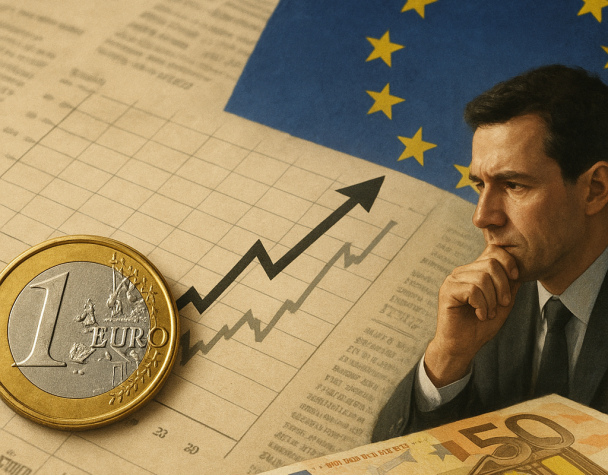
Euro Exchange Rate Dynamics Amid Recent Economic Developments
Sun, July 19, 2026Euro Exchange Rate Dynamics Amid Recent Economic Developments
In the past week, the euro has experienced notable fluctuations against major currencies, particularly the US dollar. As of July 19, 2026, the EUR/USD exchange rate stands at 1.1446, reflecting recent economic developments and policy decisions.
Recent Exchange Rate Movements
Over the last seven days, the euro’s value against the US dollar has shown variability. On July 17, 2026, the EUR/USD pair closed at 1.1439, a slight decrease of 0.0003 (-0.03%) from the previous day. This movement is part of a broader trend observed in recent weeks.
Factors Influencing the Euro’s Performance
Several key factors have contributed to the euro’s recent performance:
1. Economic Indicators
Recent economic data from the Eurozone has influenced investor sentiment. For instance, reports indicating slower-than-expected industrial production growth have raised concerns about the region’s economic recovery, impacting the euro’s strength.
2. Monetary Policy Decisions
The European Central Bank (ECB) has maintained its accommodative monetary policy stance, keeping interest rates low to support economic growth. This policy approach has implications for the euro’s attractiveness to investors seeking higher yields elsewhere.
3. Global Market Sentiment
Global economic developments, including trade tensions and geopolitical events, have also played a role in currency fluctuations. The euro, as a major global currency, is sensitive to such external factors.
Historical Context
Understanding the euro’s current position requires a look at its historical performance. Since its introduction in 1999, the euro has experienced periods of both strength and weakness against the US dollar. Notably, it traded below parity with the dollar between December 1999 and December 2002. More recently, in July 2022, the EUR/USD pair briefly reached parity for the first time in nearly two decades, influenced by global economic uncertainties.
Conclusion
The euro’s recent exchange rate movements reflect a complex interplay of economic indicators, monetary policy decisions, and global market sentiment. Investors and policymakers will continue to monitor these factors closely to navigate the evolving economic landscape.