
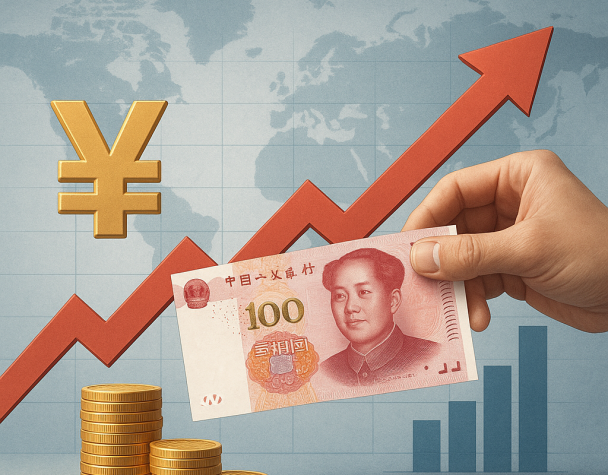
Chinese Yuan Exchange Rate: Recent Trends and Influencing Factors
Sun, July 12, 2026Chinese Yuan Exchange Rate: Recent Trends and Influencing Factors
As of July 12, 2026, the Chinese yuan (CNY) has experienced notable fluctuations against major currencies, reflecting a complex interplay of economic indicators and policy decisions.
Current Exchange Rate Overview
The USD/CNY exchange rate stands at 6.7667, indicating a slight appreciation of the yuan against the US dollar. This movement aligns with recent trends observed in the currency markets.
Recent Performance Against Major Currencies
Over the past week, the yuan has exhibited varied performance against the G10 currencies. Notably, it has shown a slight depreciation against the Norwegian krone (-1.21%) and the British pound (-0.81%). Conversely, the yuan has remained relatively stable against the US dollar (0.00%) and the euro (-0.08%). These movements suggest a nuanced response to global economic conditions and investor sentiment.
Factors Influencing the Yuan’s Movements
Several factors have contributed to the recent behavior of the yuan:
- Trade Surplus: China’s substantial trade surplus continues to bolster the yuan. The nation’s robust export performance has increased demand for the currency, contributing to its strength.
- Monetary Policy: The People’s Bank of China (PBOC) maintains a managed float system, setting a daily central parity rate and allowing the yuan to trade within a specified band. Recent adjustments to this rate have influenced market perceptions and trading behaviors.
- Global Economic Conditions: Fluctuations in the US dollar, driven by economic data releases and Federal Reserve policies, have a direct impact on the USD/CNY pair. A weakening dollar often leads to a stronger yuan, and vice versa.
Historical Context
Over the past decade, the USD/CNY exchange rate has experienced significant fluctuations, ranging from a low of 6.2746 to a high of 7.3498. These movements reflect China’s evolving economic landscape and its interactions with global markets.
Conclusion
The Chinese yuan’s recent exchange rate movements are the result of a complex interplay between domestic economic policies, international trade dynamics, and global financial market trends. Investors and policymakers should closely monitor these factors to anticipate future shifts in the currency’s value.