
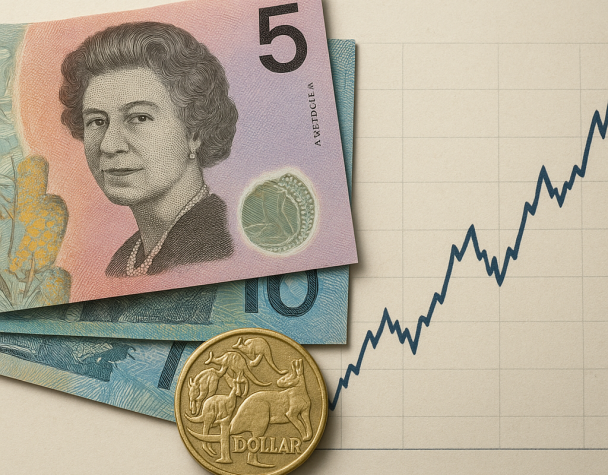
Australian Dollar Edges Up on Softer US Inflation and RBA’s Cautious Tone
Sat, September 19, 2026The Australian dollar has gained modestly against the US dollar over the past week, underpinned by softer-than-expected US inflation data that eased expectations for Federal Reserve rate hikes, alongside a hawkish-tinged pause from the Reserve Bank of Australia (RBA).
US Inflation Eases Pressure on Fed, Supports AUD
Recent US data revealed a less threatening path for inflation. Softer July Consumer Price Index and Producer Price Index figures reduced the likelihood of aggressive Federal Reserve tightening. This shift helped lift the Australian dollar as markets recalibrated rate expectations in favour of less restrictive US policy.
RBA Holds Rate, Sends Nuanced Hawkish Message
The RBA left its cash rate unchanged last week but delivered somewhat hawkish messaging. While the bank softened its inflation forecast—trimming end‑2026 trimmed mean CPI to 3.3% from 3.5%—Governor Bullock’s comments suggested that another rate hike remains possible if conditions warrant. This blend of cautious policy stance and hawkish undertones provided a supportive backdrop for the Aussie’s rally.
Market Reaction and AUD/USD Movement
AUD/USD experienced volatility around the RBA’s announcement, initially dipping to the low‑0.70s before recovering steadily thanks to the dovish tilt in US data combined with persistent RBA hawkish vibes. One commentary noted that the Australian dollar began the week just above 0.71, buoyed by these developments.
Outlook: A Delicate Balance Ahead
The recent convergence of softer US inflation and subtle RBA hawkishness may keep AUD/USD buoyed in the near term. Australia faces key upcoming domestic data—including labour force metrics and wage growth—that could sway RBA policy expectations. Meanwhile, any further easing in US inflation data may further diminish Fed tightening odds, offering additional support to the Aussie.
Key Risks to Monitor
- A stronger-than-expected US inflation print could reverse AUD gains by reviving Fed hike expectations.
- A materially more dovish shift in RBA rhetoric may reduce yield differentials, putting downward pressure on AUD/USD.
- Global commodity price swings could alter sentiment toward Australian exports and the currency.
As of September 19, 2026, the AUD/USD rate stands at 0.7121 (UTC 00:36), serving as a reference point for ongoing market developments.
Investors should watch for upcoming US inflation releases and key Australian data, which could influence both central banks’ outlooks and shape the AUD/USD trajectory in the days ahead.