
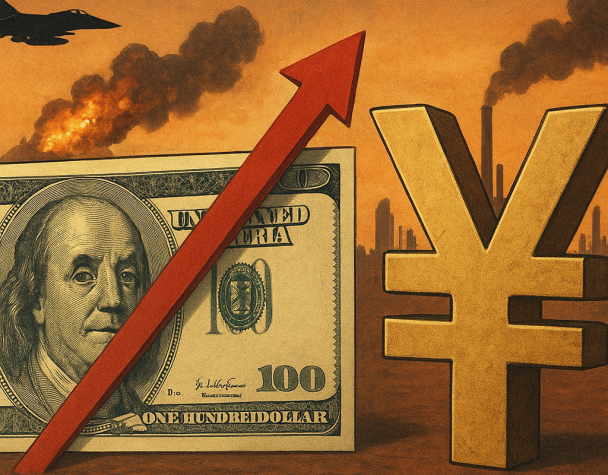
US Dollar Strengthens Amid Middle East Tensions; Japanese Yen Nears 40-Year Low
Fri, July 24, 2026US Dollar Strengthens Amid Middle East Tensions; Japanese Yen Nears 40-Year Low
On Thursday, July 23, 2026, the US dollar experienced a significant surge, reaching a new 40-year high against the Japanese yen. This movement was primarily driven by escalating tensions in the Middle East and the European Central Bank’s (ECB) decision to maintain current interest rates.
Middle East Tensions Propel Oil Prices and Strengthen the Dollar
The ongoing conflict between the United States and Iran has intensified, leading to a series of military actions and retaliations. Notably, the U.S. Senate voted to continue military operations in Iran, further escalating the situation. This geopolitical unrest has caused a sharp increase in oil prices, with Brent crude surpassing $100 per barrel for the first time since May 2026. The surge in oil prices has heightened inflation concerns, prompting investors to seek the safety of the U.S. dollar.
ECB’s Decision and Its Impact on the Euro
In a closely watched meeting, the ECB opted to keep its deposit facility rate steady at 2.25%. While this decision was widely anticipated, the euro weakened following the announcement. Market participants had hoped for more definitive guidance on future rate hikes, and the lack of immediate action led to a decline in the euro’s value against the dollar.
Japanese Yen Nears 40-Year Low
Amid these developments, the Japanese yen has depreciated significantly, nearing a 40-year low against the U.S. dollar. The U.S. Treasury Department has expressed concern over the yen’s weakness, emphasizing that excessive volatility is undesirable. Additionally, the Treasury has called for the Bank of Japan to consider interest rate hikes to address inflationary pressures and stabilize the currency.
Implications for Global Markets
The strengthening of the U.S. dollar and the weakening of the yen have broad implications for global trade and investment. A stronger dollar can make U.S. exports more expensive, potentially impacting American manufacturers. Conversely, a weaker yen could benefit Japanese exporters by making their goods more competitively priced on the international market.
Investors are closely monitoring the situation, as prolonged Middle East tensions and fluctuating oil prices could lead to further volatility in currency markets. The actions of central banks, particularly the Federal Reserve and the Bank of Japan, will be pivotal in determining the future trajectory of these currencies.
Conclusion
The interplay between geopolitical events and monetary policy decisions continues to shape the forex landscape. As the Middle East conflict unfolds and central banks respond to evolving economic indicators, currency markets are likely to remain dynamic. Stakeholders should stay informed and prepared for potential shifts in exchange rates that could impact global economic stability.