
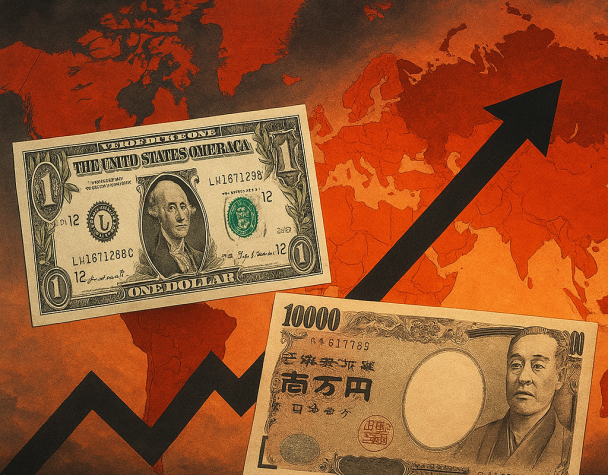
Surge in US Dollar Driven by Geopolitical Tensions; Japanese Yen Approaches 40-Year Low
Mon, August 03, 2026US Dollar Strengthens Amid Middle East Tensions; Japanese Yen Nears 40-Year Low
The US Dollar has experienced a significant surge in value over the past 24 hours, driven by escalating tensions in the Middle East. This geopolitical unrest has prompted investors to seek safe-haven assets, bolstering the Dollar’s position in the global currency market. Concurrently, the Japanese Yen has depreciated sharply, approaching its lowest level in nearly four decades.
Geopolitical Unrest Fuels Demand for Safe-Haven Assets
Recent developments in the Middle East have heightened geopolitical uncertainties, leading to increased volatility in financial markets. Investors, wary of potential economic repercussions, have gravitated towards the US Dollar, traditionally viewed as a safe-haven currency during periods of global instability. This shift has resulted in a notable appreciation of the Dollar against a basket of major currencies.
Japanese Yen’s Decline Raises Concerns
In contrast, the Japanese Yen has weakened considerably, nearing levels not seen since the early 1980s. Analysts attribute this decline to a combination of factors, including Japan’s economic policies, interest rate differentials, and the country’s exposure to global trade dynamics. The Yen’s depreciation has raised concerns among policymakers and market participants about potential impacts on Japan’s economy and its export competitiveness.
Broader Implications for the Forex Market
The current currency movements underscore the interconnectedness of global events and financial markets. As the US Dollar strengthens, other currencies, particularly those of emerging markets, may face downward pressure. This dynamic could influence international trade balances, investment flows, and economic growth trajectories worldwide.
Looking Ahead
Market participants are closely monitoring the evolving situation in the Middle East and its potential ramifications for the global economy. Central banks and policymakers may consider interventions or policy adjustments to mitigate adverse effects on their respective currencies and economies. Investors are advised to stay informed and exercise caution, as currency markets remain sensitive to geopolitical developments and economic indicators.