
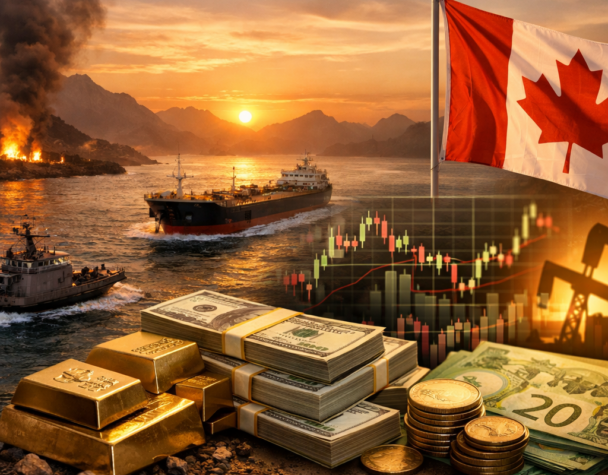
Strait of Hormuz Shock: Dollar Rally, CAD Surges!!
Fri, March 27, 2026Introduction
The recent closure of the Strait of Hormuz has produced a clear, measurable shock across energy and currency markets. Oil benchmarks spiked, safe-haven flows pushed the U.S. dollar higher, and commodity-linked currencies reacted unevenly — with the Canadian dollar standing out as the lone G10 gainer versus the greenback. This article lays out the facts, explains the transmission channels to FX, and offers practical guidance for traders and risk managers.
How the Strait of Hormuz Closure Transmitted to FX
The Strait of Hormuz is a critical chokepoint for global oil flows. When shipping through it is disrupted or threatened, crude supplies and risk premia adjust quickly. Over the referenced week, WTI rose roughly 35% and Brent about 28% as markets priced in tighter physical availability and higher freight and insurance costs. That sharp oil repricing had two reliable effects on currencies:
1. Dollar as a safe haven
Heightened geopolitical risk typically drives demand for the U.S. dollar and U.S. Treasuries. The U.S. Dollar Index (DXY) registered about a 1.5% gain in the stretch covered by the reports, reflecting position-squaring and flight-to-quality flows. Across many currency pairs, those flows outweighed local fundamental differentials.
2. Commodity currency divergence
Not all commodity-linked currencies moved the same way. Crucially, the Canadian dollar (CAD) strengthened against the dollar during the week, driven by rising oil prices and Canada’s status as a major crude exporter. That oil sensitivity made CAD an outlier among G10 currencies, which largely depreciated versus the dollar as safe-haven demand dominated.
Key Data Points
- WTI crude: ~+35% (week referenced)
- Brent crude: ~+28% (week referenced)
- U.S. Dollar Index (DXY): ~+1.5% (same period)
- G10 FX: CAD was the only major currency to appreciate vs. USD in that window
Implications for Major Currency Pairs
The interaction of oil-driven commodity flows and dollar safe-haven demand creates distinct signals for different pairs:
USD/CAD
USD/CAD is now mainly being ruled by oil moves. A sustained oil rally supports CAD and pushes USD/CAD lower. Traders should monitor oil inventories, shipping news through the Strait of Hormuz, and Canadian macro prints (employment, CPI) that could amplify or blunt oil’s impact.
EUR/USD and GBP/USD
These pairs were pressured mostly by stronger dollar flows tied to geopolitical risk and inflation concerns from higher energy prices — a classic stagflation signal. Central banks in Europe and the UK face a squeeze: rising inflation from energy costs versus growth slowdown risks.
Practical Trade and Risk Considerations
For traders and portfolio managers, the current environment calls for disciplined risk management and thematic awareness:
Positioning and stop placement
Volatility around chokepoint disruptions can accelerate quickly. Use tighter risk controls or scaled entries on directional trades. For USD/CAD short positions (i.e., betting on CAD strength), consider stops above recent volatility bands and size positions to withstand oil-news spikes.
Event monitoring
Prioritize real-time updates on shipping lanes, official statements about the Strait of Hormuz, and oil market data (inventory reports, OPEC communications). These items tend to move oil and, through it, CAD and related FX pairs.
Macro interplay
Watch central bank remarks closely. Rising energy-driven inflation can force hawkish-sounding language even when growth is weakening — creating confusing price action. That interplay often produces range-bound but choppy conditions in major crosses.
Conclusion
The Strait of Hormuz closure produced a measurable energy shock that lifted oil prices and boosted safe-haven dollar flows while simultaneously elevating the Canadian dollar as a direct commodity beneficiary. For FX participants, the key is to treat oil developments and geopolitical updates as primary inputs: they are currently the dominant drivers for CAD and a major force shaping dollar behavior. Traders should combine real-time event monitoring with strict risk controls and be ready for episodes of rapid repricing as shipping and energy news evolves.