
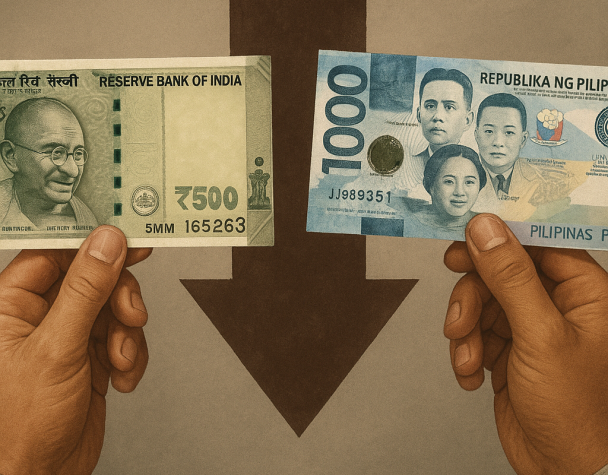
Indian Rupee Held Steady by RBI Intervention Amid Oil-Driven Pressure; Philippine Peso Hits Record Low, Weak Dollar Cushion Limited
Sun, August 23, 2026Currency markets in Asia are showing heightened stress, as oil-driven pressures weigh on major regional FX pairs and central banks step in to stabilize markets.
Rupee Stabilizes Near ₹95/USD on RBI Intervention
The Indian rupee held near ₨95 per U.S. dollar on Thursday, after earlier slipping under pressure from surging oil prices and increased importer hedging activities. The Reserve Bank of India is believed to have stepped in, with state-run banks selling dollars to contain sharp declines and prevent the currency from testing its record lows. These actions helped anchor the rupee and kept it from breaching the psychologically significant ₨96 level.
The combination of elevated crude oil volatility and corporate dollar demand continued to exert downward pressure, but the central bank’s intervention allowed the rupee to close the day only marginally changed. Yet, official support comes as markets are caught between rising global rates and persistent inflation threats.
Philippine Peso Hits Record Weakness Amid Oil Rally and Reserve Constraints
Meanwhile, the Philippine peso fell to a fresh record low against the U.S. dollar, trading as weak as ₱61.995, surpassing its previous all-time low. The decline was triggered by climbing oil prices, which have heightened inflationary risks for the import-dependent economy and stretched the peso.
The Bangko Sentral ng Pilipinas reaffirmed its mandate to intervene when excessive FX volatility arises. However, with foreign-exchange reserves down nearly 7% year-to-date, the central bank may face tougher constraints in defending the peso. Market watchers are noting that while BSP may again resort to rate hikes or intervention ahead of its August 27 meeting, the impact of these tools on FX stabilization appears increasingly limited.
Implications for Currency Investors
These two currency developments underscore diverging central-bank capacity in the region to manage external shocks amid elevated energy costs. India’s active FX interventions allowed the rupee to stabilize in the near term, but with ongoing energy volatility and hedging demand, sustained support may become costlier. In contrast, the Philippines faces a steeper challenge: reserves are under pressure and the peso’s slide may persist absent more aggressive measures.
Investors should monitor upcoming central-bank meetings and crude price dynamics closely. The RBI’s stance and the BSP’s policy decisions in late August could significantly influence regional FX trajectories in the weeks ahead.