
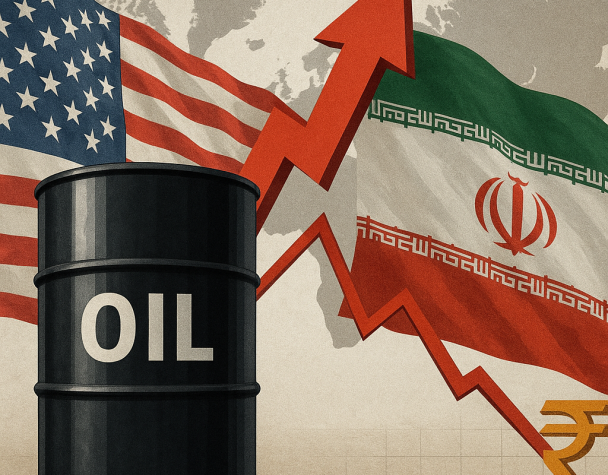
Escalating US-Iran Tensions Propel Oil Prices, Impacting Global Currencies; Indian Rupee Nears Record Low Amid Oil Surge
Mon, July 20, 2026Escalating US-Iran Tensions Propel Oil Prices, Impacting Global Currencies
On July 20, 2026, escalating hostilities between the United States and Iran have led to a significant surge in crude oil prices, causing ripple effects across global currency markets. West Texas Intermediate (WTI) crude oil prices have risen nearly 20% in July, trading around $83.50 per barrel, as the conflict threatens vital Middle East shipping lanes.
Impact on Global Currencies
The surge in oil prices has influenced various currencies differently. The US Dollar Index (DXY), which measures the Greenback’s value against six major currencies, trades 0.1% lower near 100.65. The Euro holds its recovery move at around 1.1450 against the US Dollar, with market focus on the European Central Bank’s upcoming policy decisions. The British Pound has experienced a decline, with GBP/USD falling to 1.3437, influenced by rate spreads and positioning.
Indian Rupee Nears Record Low Amid Oil Surge
The Indian Rupee has been particularly affected by the rising crude oil prices. On July 20, the Rupee weakened 12 paise to 96.42 against the US Dollar in early trade, approaching its record low of 96.96 per dollar recorded in May. The Reserve Bank of India (RBI) intervened in the foreign exchange market to stabilize the currency, selling dollars to support the Rupee. Despite these efforts, the Rupee’s depreciation reflects the pressure from higher crude oil prices and geopolitical tensions.
Conclusion
The escalating US-Iran conflict has led to a surge in oil prices, impacting global currency markets. While the US Dollar and Euro have shown resilience, the Indian Rupee has faced significant depreciation, prompting intervention from the RBI. The situation remains fluid, and market participants are closely monitoring developments in the Middle East and their potential effects on global financial markets.