
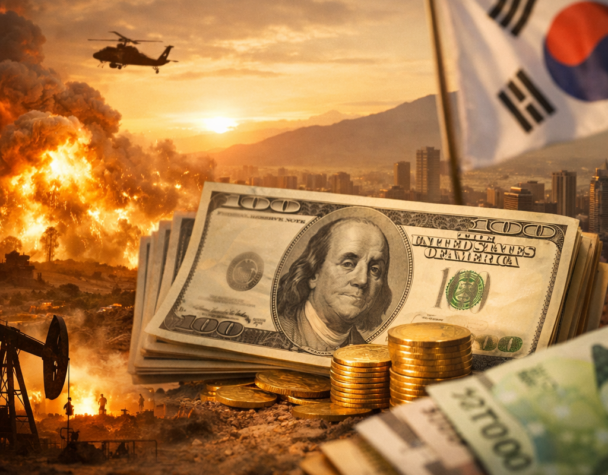
Dollar Up After U.S.-Iran Strikes; Won Falls
Tue, May 26, 2026Introduction
In the past 24 hours, two clear, market-moving stories emerged that are reshaping short-term FX flows. First, renewed U.S. military strikes in Iran have revived safe-haven demand for the U.S. dollar and supported higher oil prices. Second, a Bank of America assessment singled out the South Korean won as vulnerable despite robust trade figures—a reminder that capital flows and policy signals can outweigh fundamentals in the short run. This article summarizes the facts and lays out immediate implications for currency traders and risk managers.
Major Development: U.S.-Iran Strikes Lift the Dollar
What happened
Renewed U.S. strikes in Iran over the past day undercut hopes for a rapid de-escalation in the Middle East. Markets reacted by moving into perceived safe assets, with the U.S. dollar firming against a range of peers while oil prices climbed on renewed supply-risk concerns.
Market effects
- Safe-haven flows boosted the dollar broadly, tightening liquidity for risk-sensitive currencies.
- Crude oil rebounded, reflecting heightened geopolitical risk to Middle East supply corridors—an upward oil impulse typically supports the dollar indirectly through inflation and rate-premium expectations.
- Emerging-market currencies and risk-linked FX showed weakness as investors reduced exposure to higher-volatility assets.
Implications for major pairs
Traders should expect continued dollar support while geopolitical uncertainty persists. EUR/USD and AUD/USD are likely to face downward pressure absent a sharp reversal in risk sentiment; USD/JPY may also find additional support if the dollar rally accelerates. Position managers should monitor developments in the region and oil market moves closely, as both can trigger rapid repricing in FX and cross-asset risk premia.
Minor but Relevant: Bank of America Flags Won Vulnerability
What was reported
Bank of America released an assessment indicating that the South Korean won remains vulnerable despite a sizable current-account surplus driven by semiconductor exports. The note emphasized that portfolio flows, policy uncertainty, and domestic political events are the dominant influences on the won in the near term.
Drivers behind the warning
- Flow dynamics: Large portfolio outflows can swamp trade surpluses, leaving the currency exposed to downward pressure.
- Policy uncertainty: The Bank of Korea’s upcoming interest-rate decision and actions by major public investors (such as the National Pension Service) create event risks.
- Political calendar: Near-term domestic political events can amplify capital-flow sensitivity and heighten volatility in USD/KRW.
What this means for USD/KRW and regional FX
Even with strong trade data, KRW can underperform if foreign investors reduce risk exposure. Traders should watch for net portfolio flow data, BoK communications, and any fiscal announcements that could influence capital flows. A clear hawkish tilt from the BoK could mitigate downside pressure; absent it, USD/KRW may continue to trend higher when global risk appetite softens.
Practical Takeaways for Traders and Risk Managers
- Prioritize event monitoring: Geopolitical headlines and oil-price moves are active drivers of FX volatility—set alerts and size positions for heightened intraday swings.
- Focus on flow-sensitive currencies: Emerging-market pairs and trade-exposed currencies (like KRW) are particularly prone to rapid moves when risk sentiment shifts.
- Use layered risk controls: Consider tighter stop placement or smaller lot sizes around known events (military developments, central bank decisions, large investor meetings).
- Watch correlation channels: Rising oil and a firmer dollar can reinforce each other—monitor cross-market correlations to anticipate spillovers into FX pairs.
Conclusion
Over the last 24 hours, straightforward news—renewed U.S. strikes in Iran and a Bank of America warning on the Korean won—has been sufficient to shift FX flows. The immediate effect is a stronger dollar supported by safe-haven demand and higher oil prices, while flow-driven vulnerabilities leave the won exposed despite strong trade fundamentals. Market participants should manage positions with event-driven volatility in mind and prioritize flow indicators and central-bank communications when assessing short-term currency risks.