
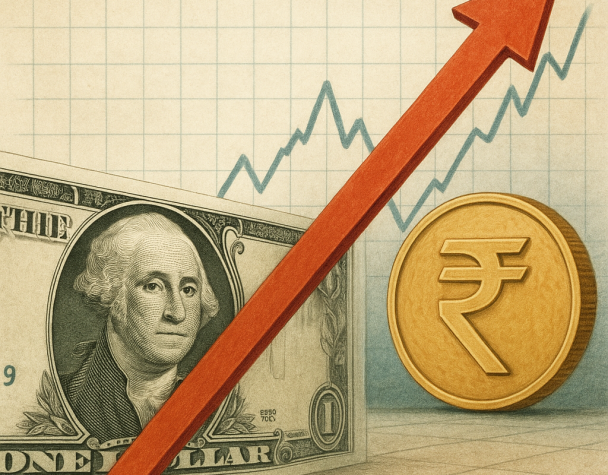
Dollar Rebounds Ahead of Fed’s Jackson Hole Signals; RBI Intervention Supports Indian Rupee
Sun, August 30, 2026The U.S. dollar regained some ground ahead of the much‑anticipated Federal Reserve symposium at Jackson Hole as investors await signals on the central bank’s policy trajectory, while in India the rupee was bolstered by a likely intervention from the Reserve Bank of India amid renewed oil price pressure.
Dollar Recoups Losses Ahead of Jackson Hole
The U.S. dollar showed signs of recovering after last week’s slide, buoyed by sticky inflation data and investor anticipation of key policy signals from the Fed at the Jackson Hole symposium. The dollar index, tracking its value against a basket of major currencies, edged higher toward recent highs. Inflation surprised to the upside in July, reinforcing expectations that rates could remain restrictive through year-end. At the same time, data confirming 1.5% economic growth in Q2 added to confidence that the U.S. economy continues to outperform its peers.
Against the euro, the dollar held steady near $1.165, while the yen remained largely unchanged around ¥159.35 per dollar. Markets are bracing for remarks from Fed Chair Kevin Warsh this week, which could confirm or alter expectations for further tightening. Analyst commentary emphasized that while the U.S. economy maintains a strong position, concerns around fiscal credibility and the potential for a more dovish Fed could cap further dollar upside.
RBI Likely Intervenes to Stabilize Rupee Against Oil Shock
In Mumbai, the Indian rupee came under pressure as oil prices rose amid escalating geopolitical tensions in the Middle East. As Brent crude surged, traders reported that the Reserve Bank of India likely stepped into the market at the open to support the rupee. The currency stabilized at approximately ₹95.27 per dollar—roughly unchanged from the previous session—after opening weaker near ₹95.35–95.40.
Oil futures were trading about 1.3% higher around $83.60 per barrel, highlighting the inflationary implications for India, a major energy importer. The central bank’s intervention appeared aimed at containing volatility and anchoring the currency amidst elevated external shocks.
What’s Driving the Moves and What to Watch Next
The dollar’s rebound reflects market caution ahead of Jackson Hole, where any shift in the Fed’s tone could quickly influence rate expectations and currency valuations. Investors will closely parse remarks for clues on whether the central bank leans hawkish, maintaining elevated policy rates, or opens the door to eventual easing.
Meanwhile, the rupee’s relative stability illustrates the RBI’s readiness to act amid rising commodity-driven pressures. Sustained oil price gains or further geopolitical escalation could force additional intervention or influence expectations around India’s monetary strategy.
Currency markets remain poised for potential shifts: the Fed’s signals in the coming days will likely be pivotal for the dollar, while oil dynamics and central bank response will set the tone for the rupee.