
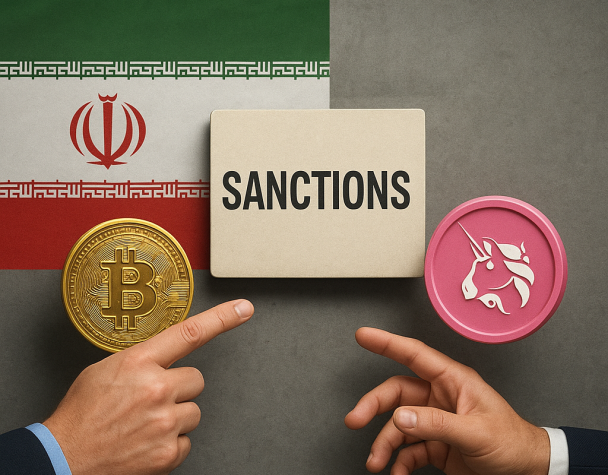
U.S. Expands Iran Crypto Sanctions While Uniswap Rolls Out 'Earn' Yield Feature
Sun, August 30, 2026The U.S. Treasury’s Office of Foreign Assets Control (OFAC) this week made a sweeping regulatory shift by extending Executive Order 13902 sanctions to include Iran’s digital‑asset sector, effective August 24, 2026. Simultaneously, Uniswap Labs unveiled a new “Earn” product powered by Morpho that lets users earn yield on USDC, USDT, or ETH directly within the Uniswap app.
OFAC Targets Iran’s Digital‑Asset Sector
On August 24, OFAC issued a determination asserting that section 1(a)(i) of Executive Order 13902 now applies to Iran’s digital‑asset economy—alongside aviation, gold, shipping, and technology sectors. Under this action, any individual or entity operating in Iran’s digital‑asset space may face sanctions under U.S. authority. The determination takes immediate effect and locks in wider enforcement powers over crypto‑related activities tied to Iran. OFAC also suspended indefinitely existing general licenses that had allowed non‑commercial personal remittances to Iran, mandating tighter scrutiny across the board.
This move heightens risk for global financial institutions, custodians, crypto platforms, and wallet providers that may touch Iran‑linked digital‑asset flows—even inadvertently. Industry stakeholders must now update sanctions‑screening protocols and compliance workflows to reflect both the newly designated sectors and any associated wallet addresses. The broader geopolitical calculus is clear: the U.S. is using digital‑asset enforcement as a strategic lever in its economic policy mix.
Uniswap Launches ‘Earn’ for In‑App Yield on Stablecoins and ETH
Meanwhile, Uniswap Labs introduced “Earn” on July 30, a new in-app feature built in partnership with Morpho. It allows users to deposit USDC, USDT, or ETH into Gauntlet‑curated lending vaults on the Ethereum mainnet. Depositors retain full custody, benefit from instant withdrawal flexibility, and receive yield generated from lending demand—all within the Uniswap interface.
“Earn gives users a simple way to put their assets to work without needing to manage concentrated liquidity positions,” said Uniswap’s product team. The integration streamlines access to DeFi yield strategies and marks another step in Uniswap’s evolution beyond basic liquidity provision into more comprehensive financial services.
Implications for Crypto Markets and Users
OFAC’s expansion of sanctions to Iran’s crypto sector raises the stakes for platforms and custodians, especially those dealing with cross-border transactions. It underscores the increasing role of policymakers in shaping the compliance landscape of digital assets.
At the same time, Uniswap’s “Earn” rollout reflects a growing user demand for streamlined, integrated DeFi services. By embedding lending capabilities into its ecosystem, Uniswap lowers friction for earning yield and signals the continued blending of trading and lending within decentralized platforms.
Together, these developments illustrate the dual trajectory of the crypto ecosystem: regulatory tightening on one hand and continued innovation in DeFi product usability on the other. For investors and providers alike, staying current on both regulatory shifts and platform capabilities remains essential.