
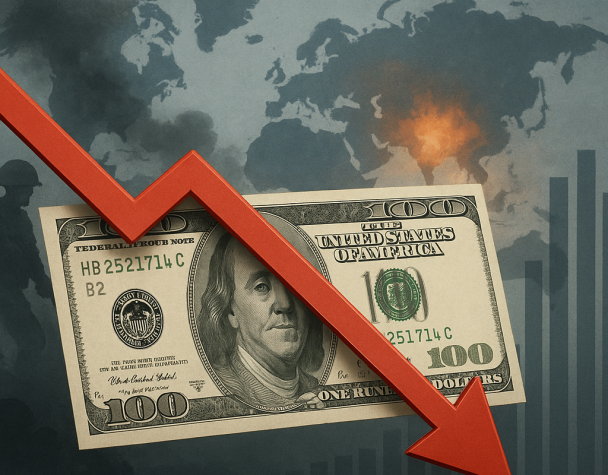
U.S. Dollar Declines Amid Geopolitical Tensions and Economic Data Releases
Tue, July 14, 2026U.S. Dollar Declines Amid Geopolitical Tensions and Economic Data Releases
In the past 24 hours, the U.S. dollar has experienced a decline against major currencies, influenced by escalating geopolitical tensions and the anticipation of key economic data releases.
Impact of Geopolitical Tensions
Renewed U.S. military actions in the Middle East, particularly the fourth round of strikes on Iran, have heightened global uncertainty. This escalation has led to increased oil prices and market volatility, contributing to the dollar’s depreciation. Investors are seeking safer assets, reducing demand for the U.S. dollar.
Upcoming Economic Data Releases
Market participants are also awaiting significant economic reports scheduled for this week. These include the Consumer Price Index (CPI) and Core CPI, which are expected to show some moderation after a decline in gas prices. Additionally, Federal Reserve Chair Kevin Warsh is set to testify before Congress, addressing topics such as inflation, interest rates, and emerging issues like cryptocurrency and artificial intelligence. These events are anticipated to influence the dollar’s performance in the coming days.
Conclusion
The U.S. dollar’s recent decline reflects a combination of geopolitical developments and the market’s focus on forthcoming economic indicators. Traders and investors are closely monitoring these factors to assess potential impacts on currency markets.
Bitcoin Holds Steady Amid Market Volatility
Despite recent geopolitical tensions, Bitcoin has maintained a relatively stable price, trading near $63,800. This stability contrasts with significant movements in traditional markets, where assets like gold, oil, equities, and government bonds have experienced sharp fluctuations following U.S. military actions in the Middle East.
Market Dynamics
While traditional markets have reacted to geopolitical events with increased volatility, Bitcoin’s price has remained largely unchanged. This behavior suggests a shift in investor sentiment, with cryptocurrencies like Bitcoin potentially moving more in line with dollar liquidity and equity cycles rather than geopolitical headlines.
Conclusion
Bitcoin’s resilience amid market volatility highlights its evolving role in the financial landscape. Investors are observing how cryptocurrencies respond to global events, considering them as alternative assets in uncertain times.