
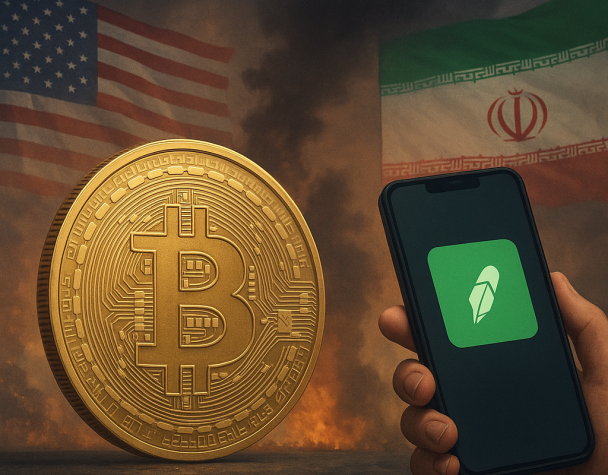
Bitcoin's Resilience Amid Escalating U.S.-Iran Conflict; Robinhood Wallet Sees User Growth
Sun, July 19, 2026Bitcoin Maintains Stability Amid U.S.-Iran Tensions
As geopolitical tensions between the United States and Iran escalate, Bitcoin has demonstrated remarkable stability, maintaining its position above the $60,000 mark. This resilience comes despite the renewed conflict, which has historically influenced global financial markets.
Market Response to Geopolitical Events
The resurgence of hostilities between the U.S. and Iran has led to increased volatility in traditional markets. Oil prices surged by 9% following the U.S. announcement of reimposing a blockade and implementing a 20% toll. In contrast, Bitcoin’s price remained relatively stable, hovering around $62,047, marking a 3.3% decrease over the week. This stability suggests that investors may view Bitcoin as a hedge against geopolitical uncertainties.
Institutional Inflows and Market Sentiment
Institutional interest in Bitcoin continues to grow, as evidenced by the recent net inflows into U.S. spot Bitcoin ETFs. On July 17, these ETFs saw net inflows of $132.3 million, led by BlackRock’s IBIT with $136.5 million. This influx indicates sustained institutional accumulation, even amid global tensions. However, market sentiment remains cautious, with the Fear & Greed Index at 29, reflecting a balanced leverage positioning and room for further accumulation without immediate liquidation risk.
Robinhood Wallet Experiences Surge Following New Chain Launch
In a significant development within the cryptocurrency space, Robinhood Wallet has reported a substantial increase in user activity following the launch of its new blockchain. This surge underscores the growing interest in decentralized finance (DeFi) platforms and the expanding role of traditional financial services in the crypto ecosystem.
Integration of Traditional and Decentralized Finance
Robinhood’s foray into blockchain technology represents a pivotal moment in the integration of traditional financial services with decentralized platforms. The new chain aims to provide users with enhanced security, faster transaction times, and lower fees, addressing some of the critical challenges faced by existing DeFi platforms. The positive reception and increased user engagement highlight the potential for mainstream financial institutions to bridge the gap between conventional finance and the burgeoning world of cryptocurrencies.
Implications for the Crypto Market
The success of Robinhood’s blockchain initiative could pave the way for other traditional financial entities to explore similar ventures, potentially leading to increased adoption and legitimacy of cryptocurrencies. Moreover, it reflects a broader trend of financial innovation, where the lines between traditional banking and digital assets continue to blur, offering consumers more diversified and accessible financial products.
Conclusion
The cryptocurrency market is navigating a complex landscape marked by geopolitical tensions and rapid technological advancements. Bitcoin’s stability amid the U.S.-Iran conflict suggests its emerging role as a geopolitical hedge, while Robinhood’s successful blockchain launch indicates a growing synergy between traditional finance and decentralized platforms. These developments underscore the dynamic nature of the crypto space and its potential to reshape global financial systems.