
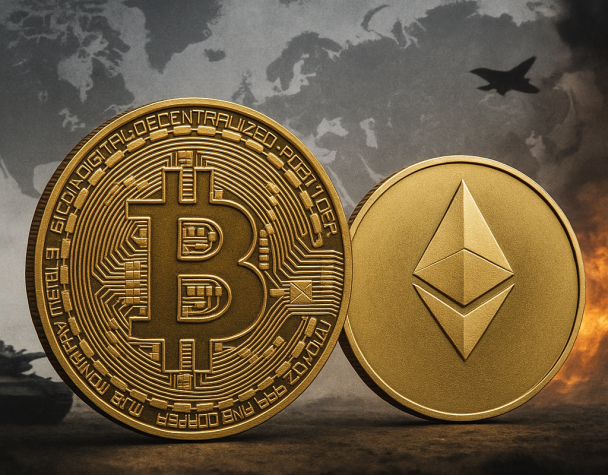
Bitcoin Dips Amid Geopolitical Tensions; Ethereum Shows Resilience
Thu, July 23, 2026Bitcoin Dips Amid Geopolitical Tensions; Ethereum Shows Resilience
On July 22, 2026, the cryptocurrency market experienced notable fluctuations, with Bitcoin declining by 0.7% to settle at $65,877, while Ethereum exhibited marginal gains, rising 0.2% to $1,926. These movements occurred against a backdrop of escalating geopolitical tensions and legislative developments impacting the digital asset landscape.
Geopolitical Tensions Impact Bitcoin
The ongoing conflict between the United States and Iran has introduced significant volatility into global financial markets. The 11th consecutive night of U.S.-Iran strikes has heightened investor caution, leading to a shift towards safer assets. This risk-off sentiment has adversely affected Bitcoin, which declined by 0.7% to $65,877. The Fear & Greed Index, a measure of market sentiment, stood at 33 out of 100, indicating a prevailing sense of fear among investors.
Ethereum’s Relative Stability
In contrast to Bitcoin’s decline, Ethereum demonstrated resilience by posting a slight gain of 0.2%, reaching $1,926. This relative stability suggests a potential rotation of investor interest towards Ethereum, possibly due to its diverse use cases and ongoing developments within its ecosystem.
Legislative Developments: The Digital Asset Market Clarity Act
Amid these market movements, the progress of the Digital Asset Market Clarity Act has garnered attention. This legislative initiative aims to provide a clear regulatory framework for digital assets, addressing longstanding uncertainties that have affected the cryptocurrency market. While the act’s advancement offers a positive outlook for the sector, it has not been sufficient to counterbalance the immediate pressures stemming from geopolitical events.
Market Outlook
As geopolitical tensions persist, the cryptocurrency market is likely to remain sensitive to global events. Investors are advised to monitor developments closely, as the interplay between international conflicts and legislative progress will continue to influence market dynamics. The resilience of Ethereum amidst Bitcoin’s decline highlights the importance of diversification and staying informed about both macroeconomic factors and sector-specific developments.
In conclusion, the cryptocurrency market on July 22, 2026, was characterized by Bitcoin’s decline amid geopolitical tensions and Ethereum’s relative stability. The progression of the Digital Asset Market Clarity Act adds a layer of complexity to the market, underscoring the need for investors to remain vigilant and adaptable in response to evolving global and regulatory landscapes.