
Bessent Urges No Fed Cuts — Crypto Tension Rises!!
Wed, April 15, 2026Bessent Urges No Fed Cuts — Crypto Tension Rises!!
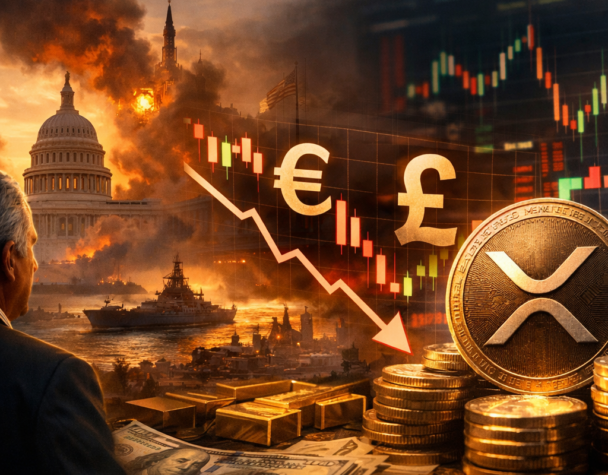
U.S. Treasury Secretary Scott Bessent’s recent public push for the Federal Reserve to hold off on rate reductions has quickly reverberated through risk assets, with cryptocurrencies among the hardest hit. At the same time, regional currency moves—most notably a steep EUR/GBP decline after softer Eurozone inflation—have produced idiosyncratic effects for individual tokens such as XRP. This article explains why the Fed‑cut delay signal matters for crypto broadly and how a specific forex swing helped lift XRP.
Why a Fed hold‑off matters for crypto
What happened
On April 13, 2026, Treasury Secretary Scott Bessent publicly urged caution on cutting interest rates, citing elevated inflation risks linked to the Iran conflict and rising energy prices. The message: premature easing could re‑ignite inflation expectations. Markets interpreted this as a signal that the Fed may keep policy tighter for longer, reducing near‑term liquidity that has supported speculative assets.
Transmission to cryptocurrencies
Cryptocurrencies are highly sensitive to changes in risk appetite and dollar liquidity. When expectations of rate cuts fade, two key effects typically unfold: (1) real yields and borrowing costs rise or remain elevated, making leveraged crypto positions more expensive; (2) dollar‑denominated safe assets become relatively more attractive, prompting reallocation away from high‑beta assets.
In the hours after the announcement, Bitcoin traded around $74,426 and broader sentiment measures slipped—illustrating how macro pronouncements can swing crypto flows even when fundamentals remain unchanged. With the Crypto Fear & Greed Index around 21 (Extreme Fear), traders showed a notable preference for reducing exposure.
EUR/GBP plunge and its ripple to XRP
Forex trigger: softer Eurozone inflation
Separately, Eurozone inflation prints came in below consensus, prompting a sharp decline in EUR/GBP—the pair recorded its largest single‑day drop in several weeks. The move reflected renewed divergence between the ECB’s and Bank of England’s near‑term policy trajectories and prompted rapid FX rebalancing across Europe.
Why XRP benefited
Unlike broad crypto sentiment tied to U.S. rate expectations, the EUR/GBP shock produced a localized demand shift favoring tokens with heavy usage in cross‑border payment and institutional corridors. Ripple’s XRP, commonly used in remittances and liquidity management for payment providers, registered about a 6% intraday gain amid increased institutional accumulation and ETF inflows. Two mechanisms likely contributed:
- FX‑hedging and instant rails: Firms facing sudden EUR weakness relative to GBP may have sought faster, lower‑cost payment rails. XRP’s on‑chain liquidity solutions can be attractive in such short‑notice FX rebalancing.
- Regional buying dynamics: Retail and institutional buyers in Pound‑denominated accounts saw a repricing opportunity versus EUR‑denominated holdings, nudging execution into XRP for hedging and settlement.
Putting both stories together: macro vs. micro drivers
Broad headwinds, targeted opportunities
Bessent’s call for patience on rate cuts is a macro headwind for the whole crypto sector because it preserves a tighter liquidity backdrop and raises funding costs for speculative positions. That tends to depress highly correlated tokens, reduce new inflows, and increase volatility.
Conversely, currency moves like the EUR/GBP drop create selective pockets of demand. Tokens with practical use cases in payments or regionally concentrated liquidity—such as XRP—can outperform even when headline sentiment is negative.
How traders and treasuries can respond
- Reassess funding strategies: With tighter rate expectations, reduce leverage and include higher cash buffers to withstand drawdowns.
- Use FX-aware execution: When significant currency moves occur, evaluate whether payment‑oriented crypto (XRP, stablecoins) improves settlement timing or cost compared with traditional FX routes.
- Monitor policy signals: Statements from finance officials and central banks can shift probability of rate paths quickly—trade plans should incorporate scenario thresholds rather than relying on a single forecast.
Conclusion
Scott Bessent’s call for delaying Fed rate cuts tightened the macro backdrop for risk assets, reinforcing an environment of elevated caution for most cryptocurrencies. Yet, currency dislocations—like the recent EUR/GBP decline—can create narrow but meaningful opportunities for tokens tied to payments and cross‑border flows, exemplified by XRP’s outperformance. Investors should balance macro awareness with tactical responses to localized FX-driven demand when positioning in crypto.
Data points referenced reflect intraday moves reported around April 13–15, 2026 and were used to illustrate recent market dynamics.