
Gold Surges Above $4,640 on Fed Cut Bets; $5k View
Wed, January 14, 2026Gold Surges Above $4,640 on Fed Cut Bets; $5k View
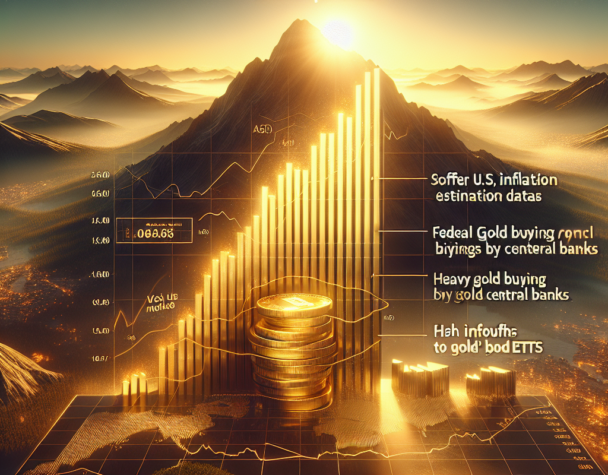
Gold pushed to new record levels this week, reflecting a near-term confluence of macro and structural forces that directly moved price action. Softer U.S. inflation readings reinforced expectations of Federal Reserve rate cuts, prompting bullion to spike—spot gold reached roughly $4,639.42 per ounce on January 14, 2026, with U.S. futures briefly topping $4,640.90. That sharp move was accompanied by silver trading above $90 per ounce and by sizable flows into gold-backed ETFs.
Why prices jumped: concrete drivers
1) Dovish inflation data and renewed Fed-cut expectations
The immediate catalyst was lower-than-expected U.S. inflation prints, which pushed markets to price a higher probability of Fed easing. Lower expected real yields reduces the opportunity cost of holding non-yielding assets like gold—an effect that materialized quickly as investors re-priced interest-rate trajectories and moved to allocate to safe havens and duration-like stores of value.
2) Central-bank accumulation remains structural
Central banks continued to buy aggressively, adding a clear, steady bid underneath bullion. China added 28.5 metric tons in 2025, while other reserve managers such as Brazil, Finland and Turkey increased purchases. This steady state demand differs from short-term flows because reserves are bought for long-term strategic allocation rather than tactical trading, and it materially tightens available supply in the official and quasi-official inventory pool.
3) Record ETF inflows and concentrated retail/wholesale demand
Exchange-traded funds were a major amplifier: 2025 saw roughly $89 billion in inflows into gold-backed ETFs, and the SPDR Gold Trust recorded one of the larger single-day inflows (around $950 million). ETF accumulation translates directly into physical demand via authorized participants and dealers, further compressing nearby deliverable inventory and supporting prices.
Short-term price action and risk management
After the initial surge, the market experienced routine profit-taking: spot gold eased back to approximately $4,593.81 and February futures traded near $4,587.10 as some traders booked gains. Over the latest week gold rose about 3.4%, roughly 7.4% over two weeks and is up around 6.5% year-to-date—a swift run that increases short-term volatility even as structural drivers persist.
Analyst positioning and target ranges
- Several institutions now cite $5,000-plus as a plausible near-to-medium term milestone, driven by continued central-bank buying, ETF demand and persistent geopolitical risk.
- J.P. Morgan and others have outlined scenarios where gold approaches $5,000 by late 2026 and could extend higher if these flows continue.
- Contrasting view: some wealth managers warn about gold’s historical volatility and emphasize equities for long-term wealth accumulation—important context for position sizing and risk controls.
What this means for investors and traders
For investors, the current environment blends tactical and strategic themes. Tactically, the decline in inflation prints and rising Fed-cut odds create a near-term tailwind. Strategically, persistent central-bank purchases and record ETF inflows represent a durable demand shock that could support higher structural price floors.
From a trading standpoint, elevated momentum increases the chance of sharp intraday or multi-day corrections. Using staggered entries, defined stop levels and position sizing informed by gold’s historical drawdowns—sometimes exceeding 50% in extreme cycles—remains prudent. Think of current dynamics as adding more gasoline to a fire already fed by long-term buyers: when momentum is high, price can spike quickly, but so can reversals.
Conclusion
This week’s move—spot highs near $4,640—was driven by measurable events: softer U.S. inflation data that boosted Fed-cut expectations, continued central-bank accumulation (notably China’s additions), and heavy ETF inflows. Those forces are not speculative; they are observable, quantifiable contributors to the price. Short-term profit-taking has produced pullbacks, but structural demand keeps $5,000 and higher price scenarios on many desks. Investors should balance upside conviction with disciplined risk management given gold’s history of sharp corrections even amid bullish secular narratives.
Author: commodity investor and market analyst