
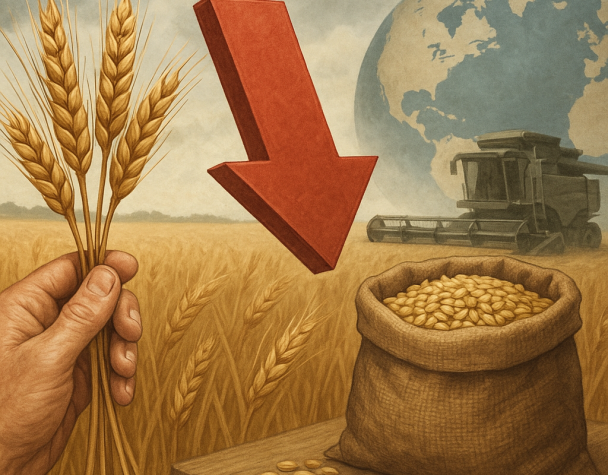
Wheat Market Faces Supply Constraints Amid Record-Low U.S. Acreage and Global Dynamics
Tue, July 07, 2026U.S. Wheat Acreage Declines to Historic Lows
The U.S. Department of Agriculture (USDA) has reported a significant reduction in wheat acreage for 2026, with plantings totaling 42.7 million acres—the lowest since 1970. This 6% decrease from the previous year is primarily due to farmers shifting towards more profitable crops like soybeans, influenced by higher input costs and adverse weather conditions. The reduction is most pronounced in durum wheat, which saw a 9–10% decline in planted area. Despite this decrease, U.S. wheat stocks remain relatively high, tempering immediate price surges. On-farm stocks have slightly decreased, while off-farm holdings have risen by 11%, indicating that much of the surplus is held in commercial channels and readily available to the market. This tends to cap rallies as end-users can secure coverage without bidding aggressively for farm stocks.
Global Supply Dynamics and Black Sea Region’s Influence
While the U.S. faces supply constraints, the Black Sea region, particularly Russia and Ukraine, continues to exert significant influence on global wheat prices. Russian wheat exports have increased, though margins remain challenging due to fluctuating freight costs and geopolitical tensions. Ukrainian wheat, despite logistical challenges, is trading at a premium due to sustained demand and operational export corridors. The Platts Milling Wheat Marker, which reflects Black Sea wheat prices, has experienced fluctuations, recently assessed at $232 per metric ton, indicating ongoing price pressures amid weak demand and improved yields in key producing areas.
Impact of Geopolitical Events on Freight and Prices
Geopolitical developments, such as the tentative U.S.-Iran peace deal, have had a nuanced impact on the wheat market. While the agreement has the potential to reopen the Strait of Hormuz, a critical passage for global trade, the immediate effect on wheat prices has been limited. Market participants anticipate that the most significant impact will be on freight costs, which could decline as war-risk premiums decrease. This potential reduction in shipping expenses may exert downward pressure on delivered wheat values, though the extent of this effect remains to be seen.
Weather Conditions and Their Implications
Adverse weather conditions continue to pose challenges for wheat production. In North America, persistent dry weather across key growing regions has raised concerns about potential crop damage. The U.S. winter wheat harvest is progressing, but crop conditions have worsened, with 33% rated as poor. In Canada, wet conditions have delayed seeding, adding to the uncertainty surrounding the upcoming harvest. Globally, the return of El Niño conditions threatens to disrupt weather patterns, potentially leading to droughts in some regions and excessive rainfall in others, further complicating the wheat supply outlook.
Market Outlook and Investor Considerations
Given the combination of reduced U.S. acreage, geopolitical developments affecting freight costs, and unpredictable weather patterns, the wheat market is poised for potential volatility. Investors should closely monitor these factors, as they could lead to fluctuations in wheat prices. The Teucrium Wheat Fund (WEAT), a fund in the USA market, is currently trading at $22.93, reflecting the market’s response to these dynamics. As of July 7, 2026, the fund has experienced a slight increase of 0.88% from the previous close. Staying informed about ongoing developments in global supply, geopolitical events, and weather conditions will be crucial for making informed investment decisions in the wheat market.