
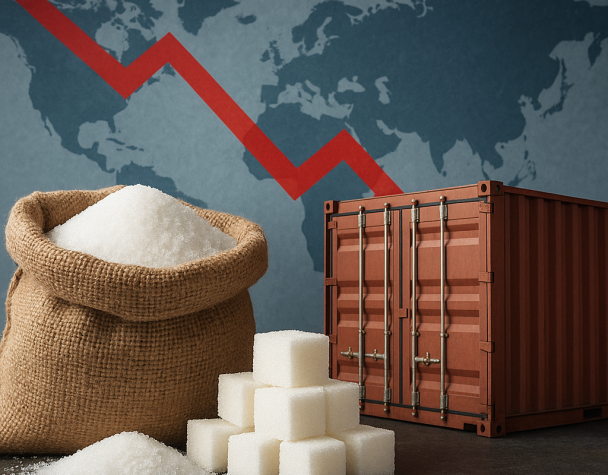
Recent Developments in the Sugar Market: Export Bans and Global Surplus Impact Prices
Sun, July 12, 2026India’s Export Ban and Global Surplus Pressure Sugar Prices
In recent weeks, the global sugar market has experienced significant developments impacting prices and trade dynamics. Notably, India’s decision to ban sugar exports until September 2026 and a global surplus have exerted downward pressure on sugar prices.
India’s Export Ban
On May 14, 2026, the Indian government announced an immediate ban on sugar exports, effective until September 30, 2026. This policy shift, changing the export status from “restricted” to “prohibited,” aims to ensure sufficient domestic supply and stabilize local prices. Following the announcement, shares of major Indian sugar companies, including Ugar Sugar Works, EID Parry, and Shree Renuka Sugars, experienced declines ranging from 1.56% to 6.95%.
Global Surplus and Price Pressure
Concurrently, the global sugar market is grappling with a surplus. Forecasts for the 2025/26 season predict a surplus of approximately 7 million tonnes, the largest since 2017/18. This surplus is primarily due to record production levels in key countries such as Brazil, India, and Thailand. The abundant supply has led to a bearish market sentiment, with prices remaining under pressure.
Market Reactions and Outlook
In response to these developments, sugar prices have exhibited volatility. For instance, raw sugar futures on the ICE exchange dropped to 13.61 cents per pound following news of the U.S.-Iran agreement, marking their lowest point since late April. However, prices stabilized shortly after, trading 0.2% higher at 13.72 cents. Analysts suggest that while short-term support may arise from geopolitical developments, the overarching surplus is likely to keep prices subdued.
Conclusion
The combination of India’s export ban and the global surplus has created a complex landscape for the sugar market. Stakeholders should closely monitor policy decisions and production forecasts, as these factors will continue to influence market dynamics and pricing trends in the coming months.